





Lipoedema stages
You may have recently been diagnosed with lipoedema or you may suspect that you have lipoedema yourself. You may also have a relative or friend who has been diagnosed with lipoedema and would like to find out more about this condition in order to provide them with helpful support.
Lipoedema is a painful increase in subcutaneous fatty tissue on the legs and occasionally also on the arms, which always occurs symmetrically. This can - but does not necessarily have to - lead to changes in the body silhouette. There is often a narrow upper body with a widened lower body. Hands and feet are always left out of the changes. The causes of lipoedema are still unclear.
Different stages and types of lipoedema
In 2015, the first official guideline on the disease „lipoedema“ was published in Germany, which categorised lipoedema into three different stages that are still used by the general public and the media today.
It should be said in advance, however, that this staging is increasingly criticised in specialist circles. It is based exclusively on the external appearance and in particular on the skin changes. However, it completely ignores pain as an obligatory component of lipoedema in its various forms.
For example, a patient in stage I with almost no externally recognisable changes may experience severe pain and have a high level of suffering with an urgent need for treatment. In contrast, there are patients with an advanced stage III with overhanging fat lips but only minor complaints. This constellation is more in favour of conservative treatment. To make matters worse, the transitions between the individual stages can be fluid and subjective.
A new version of the lipoedema guideline is currently being drafted in Germany and will probably be published this year (2024).
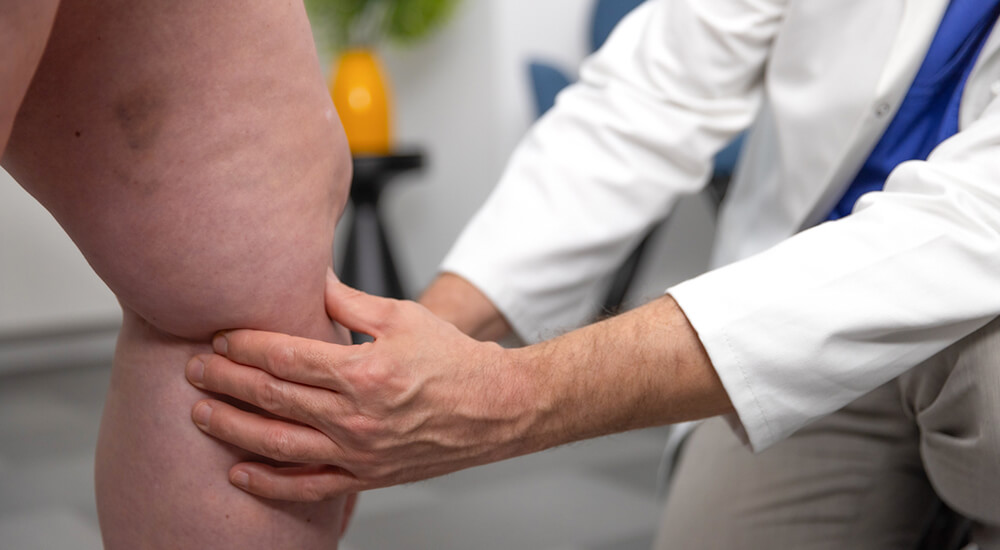
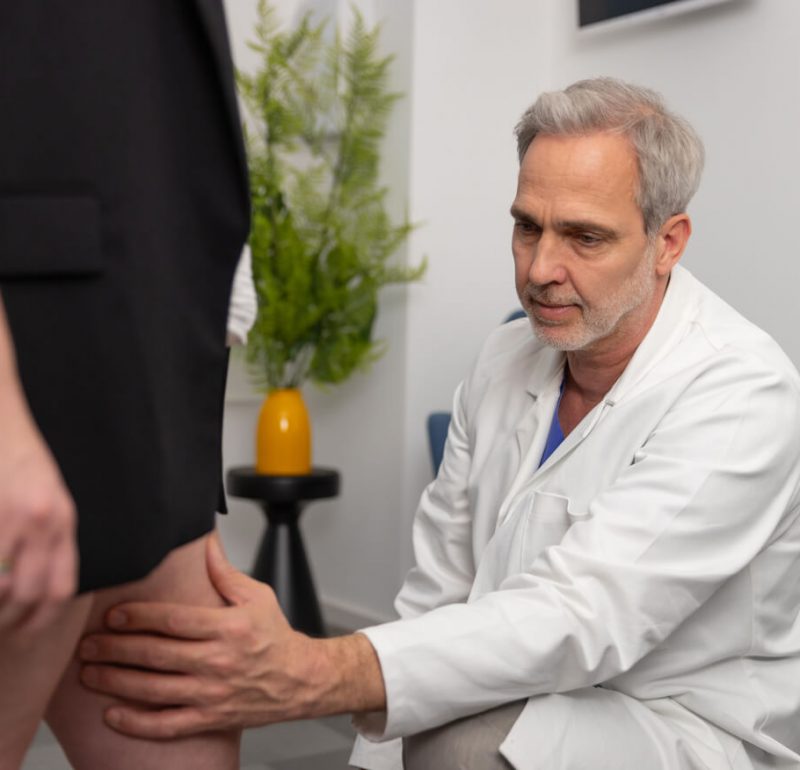
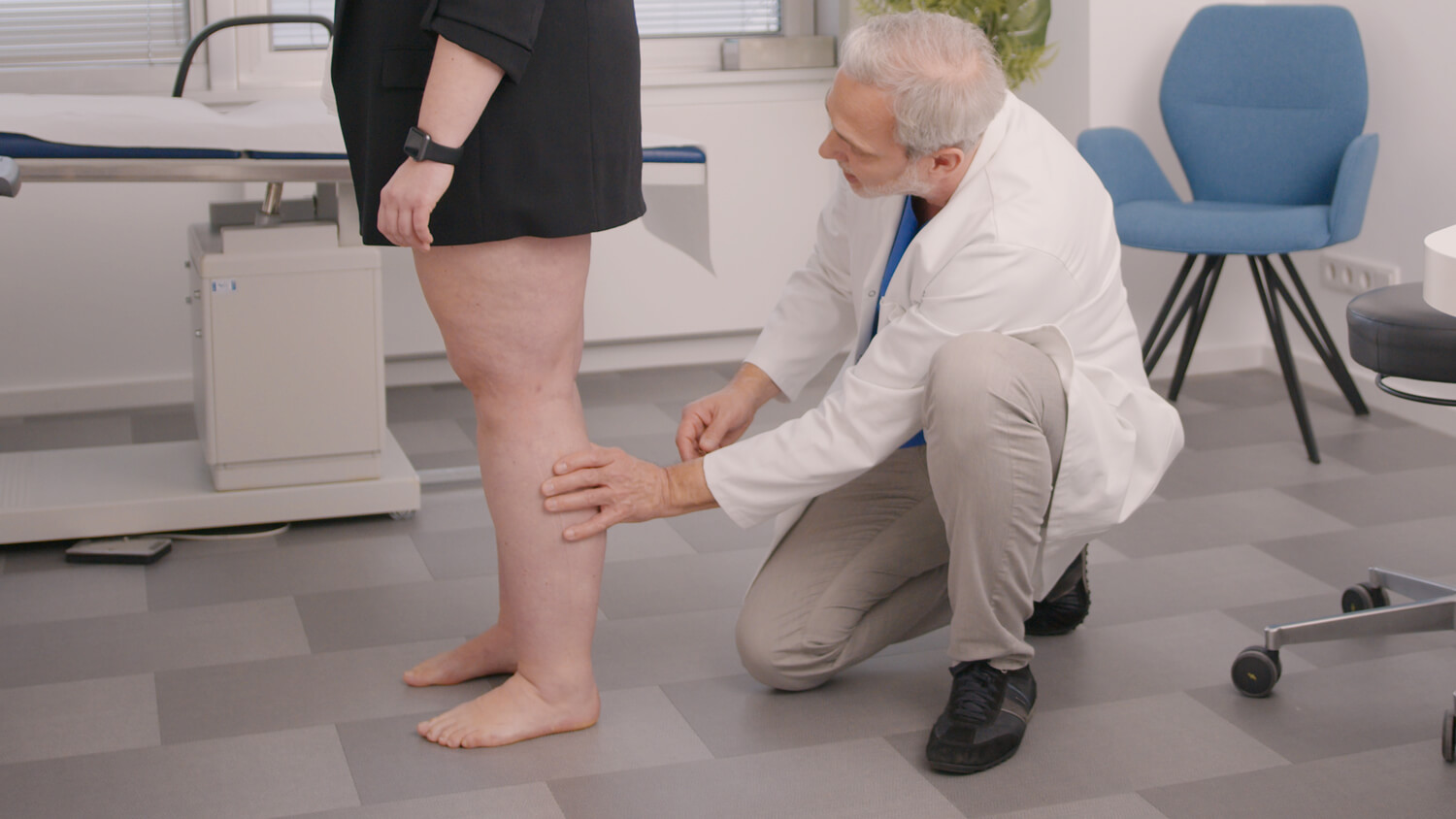
The following stages of lipoedema are distinguished depending on the external appearance:
Stage I:
Smooth skin surface without irregularities.
Stage II:
Uneven, predominantly wave-like skin surface (similar to cellulite).
Stage III:
Pronounced increase in circumference with overhanging fatty tissue (so-called dewlap formation).
There are also four different types of lipoedema, depending on the localisation of the affected increased and painful fatty tissue:
Type I:
The increased fatty tissue is only found on the buttocks (so-called saddlebags).
Type II:
The increased fatty tissue affects the entire thigh up to the knee joints.
Type III:
The entire leg from the hips to the ankles shows increased fatty tissue.
Type IV:
The arms - and in particular the upper arms - show increased fatty tissue.
In contrast to the categorisation into stages, this classification into types plays a rather subordinate role in everyday life and is used more for planning a surgical procedure.
As already mentioned, the staging only refers to the external appearance and completely disregards the degree of symptoms. However, the severity of the symptoms is of central importance for a sensible treatment decision: a high level of pain despite minor external changes in stage I or II is more in favour of surgery. Low levels of pain with extensive fatty tissue (stage III) tend to favour the conservative approach.
Ultimately, however, it is always the patient who decides which route to take. However, a prerequisite for a good decision is to be sufficiently informed about the advantages and disadvantages of the alternatives.
Is lipoedema always progressive?
To date, there is no scientific proof that lipoedema is always progressive. A transition to a higher stage can occur - but does not have to.
There are many patients who remain at a certain stage throughout their lives without any deterioration. Emphasising this aspect is particularly important to me, as I see many patients in my consultations who are very afraid of continuously gaining fat tissue and being helpless in the face of this weight gain. They are afraid that one day they will have an out-of-shape body and won't be able to do anything about it.
But: Adipose tissue can never multiply on its own! There is a reason why the body builds up fatty tissue. This reason is not the presence of lipoedema per se, but always a positive energy balance.
In most cases, we consume more energy (calories) than we break down or there is a metabolic disorder such as hypothyroidism. For example, almost 40% of all lipoedema patients have an underactive thyroid gland (so-called hypothyroidism, e.g. as part of Hashimoto's thyroiditis).
Our body always stores excess energy in the form of fatty tissue. So if your body builds up more fatty tissue, it can only do this if your everyday energy balance between energy intake (food - including drinks!) and energy output (physical activity) is not in equilibrium and has a positive balance. Then we gain weight - regardless of whether we have lipoedema or not.
There is simply no such thing as „self-proliferating“ fatty tissue - as it is often described in the social media - not even in lipoedema. According to the law of conservation of energy in physics, the sum of all energies always remains the same.
This means that only one form of energy (fatty tissue) can be produced by destroying another (e.g. food). No new energy - i.e. fatty tissue - can be produced on its own. Once you have realised this fact, you will know that you can always control an increase or decrease in your fatty tissue yourself, even with lipoedema!
What you cannot control, however, are the places where your body stores fat tissue, as this is related to the individual distribution of your fat receptors. These are determined by genetics and gender.
Women often tend to store more fatty tissue on their hips and thighs, known as „breastfeeding fat“. The female body builds up energy reserves in these areas for phases of increased energy requirements (e.g. breastfeeding babies).
Lipoedema is only diagnosed when symptoms - primarily in the form of pain - also occur in this increased fatty tissue. Without symptoms, this increased fatty tissue is simply referred to as „lipohypertrophy“ and has no pathological value.
Why is early detection of lipoedema important?

Many women have been on an odyssey from doctor to doctor for years without getting the right diagnosis.
However, lipoedema-related pain can be treated well and early detection is therefore important.
In addition, a change in diet and increased physical activity can prevent lipoedema from progressing to a more advanced stage.
By initiating compression therapy with appropriate compression garments and additional manual lymphatic drainage to relieve pain (not to drain fluid, which does not exist in lipoedema), symptoms can be alleviated.
Early detection prevents secondary diseases. Particularly in stage III lipoedema, the massive increase in subcutaneous fatty tissue can lead to orthopaedic problems such as back, hip and knee joint pain with an increasing knock-knee position in the knee joints.
Skin problems can occur due to rubbing of the thighs together at the crotch and dermatoses (e.g. fungal infestation) in deep skin folds in stage III. Good skin care and, if necessary, dermatological treatment is therefore essential, especially in stage III.
Management and treatment of lipoedema:
Being diagnosed with lipoedema brings many women a long-awaited relief, as they have now found an explanation for their symptoms. However, it also leaves them unsure about the road ahead.
Surgery is not always the only option at the end of conservative treatment. Early, stage-appropriate liposuction can offer many patients the opportunity to quickly become symptom-free.
However, lipoedema is not curable and compression garments may still need to be worn during the day even after surgery.
Paying attention to the right diet and sufficient exercise is also essential after liposuction, as otherwise new fat deposits can occur in other areas. These are then often interpreted by patients as a recurrence of lipoedema. However, the new fat deposits are only the result of a continuing excess of energy for the body. Our body always converts excess energy into fatty tissue.
In my private practice, I will examine you for lipoedema and advise you on how to proceed depending on the findings. If necessary, I will initiate conservative therapy or perform the appropriate operation (liposuction) under outpatient conditions.
Living with lipoedema - tips and advice
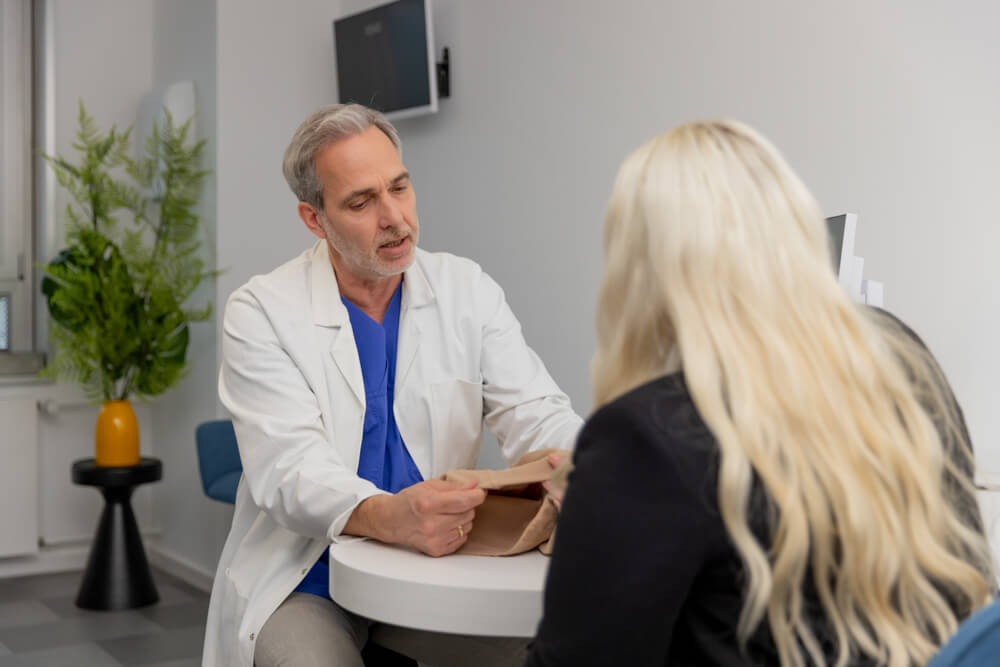
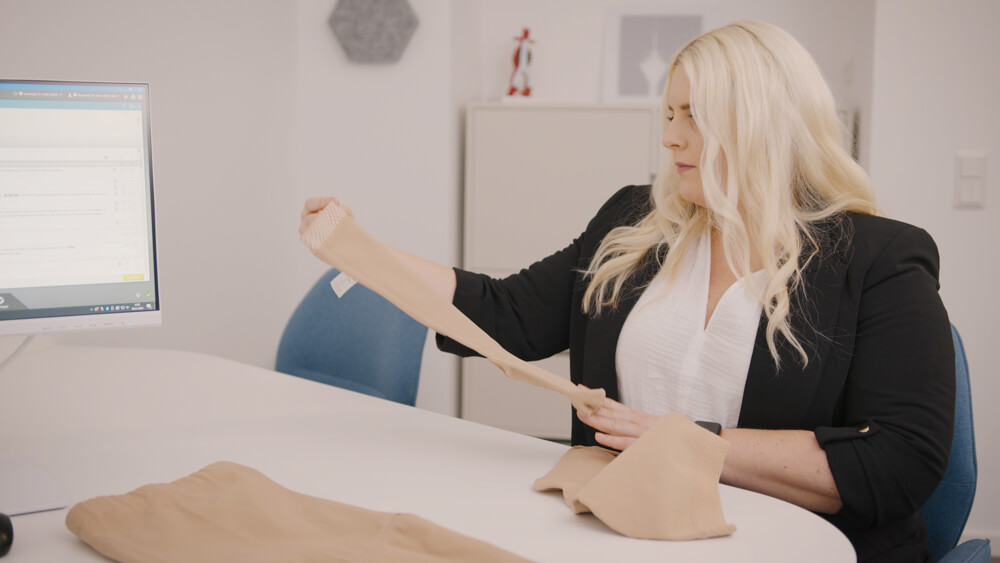
Once you have been diagnosed, start wearing compression underwear during the day (flat-knit, compression class II) and continue to do so if this relieves your symptoms. Visit a good medical supply store, where you will receive correctly fitted compression underwear as well as lots of tips and tricks on how to use the girdle.
Regular manual lymphatic drainage can help with your symptoms, even if there is no increased fluid in the soft tissue for removal in lipoedema. Of course, excess fatty tissue cannot be massaged away. However, the gentle and stroking movements seem to have a pain-relieving effect.
IPK therapy and nutritional review
As a supportive measure, you can carry out so-called intermittent pneumatic compression therapy (IPC) at home, in which machine-inflated air cuffs exert slight pressure on the affected fatty tissue of the extremities, which also has a pain-relieving effect.
Put your eating habits to the test, preferably together with a nutritional therapist, as everyone's metabolism is different. There is no such thing as „the“ right diet. This also includes drinks and avoid light or zero drinks, as they have also been proven to lead to weight gain: the sweet stimulus in the brain leads to an increased release of insulin via hormonal circuits with subsequent storage of fatty tissue. Insulin is the fattening hormone and promotes the build-up of fatty tissue in our body.
Holistic strategies for movement, treatment and self-acceptance
Get enough exercise in your everyday life and it is best to start building muscle, as increased muscle mass per se means an increased daily basal metabolic rate. You don't have to go to the gym to do this, there are wonderful exercises with your own body weight that you can do at home or outdoors.
If all conservative measures do not lead to freedom from symptoms, another option is surgery (liposuction). It offers the prospect of lifelong freedom from symptoms, but does not guarantee this.
Last but not least, you should treat yourself with understanding and affection. Your fellow human beings will not perceive you in terms of your lipoedema, but as the person you are. If necessary, get professional help in this area as well; it can change your attitude towards lipoedema.
Conclusion:
- The current staging of lipoedema is often not helpful, as it only reflects the external appearance - especially of the skin - and not the symptoms and the level of suffering of the affected patients.
- Progression of lipoedema to higher stages is possible but not mandatory. It is possible for it to remain in one stage permanently or even regress to a lower stage.
- Help is available at every stage of lipoedema, but it always includes a change in your lifestyle (exercise, diet).
- Early detection of lipoedema is important in order to spare patients a long period of suffering and pain and to prevent progression to a more advanced stage.
- Vascular physicians (phlebologists, vascular surgeons, angiologists) and lymphologists are the first point of contact after the family doctor for the diagnosis and treatment of lipoedema.
FAQ
There are three different stages of lipoedema, which mainly focus on the external appearance and texture of the skin.
They do not provide any information about the degree of pain perception and are therefore only of limited value or of little help in making treatment decisions.
This can best be recognised through self-inspection, but the transitions between the individual stages are often fluid and subjective.
The treatment methods in the various stages do not differ fundamentally from one another.
Both conservative and surgical treatment can be considered at any stage.
Ultimately, it is always the patient who decides which course of treatment to take.
Lipoedema is not necessarily progressive, i.e. a certain stage can persist permanently. However, a cure for lipoedema is not (yet) possible.
However, by losing fatty tissue (regression or surgical removal), a certain stage can be reduced to a lower stage until the patient is free of symptoms.
Pay particular attention to sufficient exercise and your eating habits.
Wearing compression underwear reduces the discomfort, but can also be a nuisance on some days.
Develop a positive view of the illness.
We will diagnose you if lipoedema is suspected and initiate appropriate treatment.
If you decide to have an operation, we will perform a liposuction suitable for the stage of the procedure under outpatient conditions.
We support you in every phase of your treatment and are your contact for all questions relating to lipoedema.
Further information on lipoedema
What is lipoedema
Symptoms
Treatment
Impressions of the practice