


Varicose veins
Varicose veinsminimally invasive treatment
Varicose veins - medically known as varicosis, varicose veins or varicose veins - not only look unsightly, they are also a serious problem. Clinical picture with increased risk for phlebitis (inflammation of the veins), varicose vein haemorrhage or thrombosis. For those affected, they can also be extremely painful and can be characterised by persistent swelling and a Feeling of heaviness of the legs. Because varicose veins cause the valves in the vessel to leak due to the dilation of the affected veins, the muscle pump of the calf muscles can no longer sufficiently pump the blood from the legs towards the heart and the blood sinks into the lower leg tissue. The increasing blood volume in this way leads to a vicious circle of further damage to healthy vein sections on the leg. Who has varicose veins untreated therefore risks Severe long-term damage to the leg veins (so-called CVI = chronic venous insufficiency) and, as the final stage of the disease, the formation of open sores on the lower leg that are difficult to heal (so-called leg ulcers). These are also known as Lower leg ulcers or in the vernacular as „open legs“.
Therefore, in addition to the aesthetic aspect and the alleviation of symptoms, the removal of varicose veins is always also a preventive and medically indicated intervention.
What are varicose veins?
Therapy options
Varicose vein therapy
Radio wave therapy and laser procedures as a gentle treatment method
The technique known as endovenous surgery offers both functional and cosmetic benefits. Advantages:
In contrast to classic open surgery with a groin incision and removal of the insufficient trunk vein with a stripper, the gentle endovenous procedures By inserting a catheter probe through a single puncture in the vein, the varicose vein is welded from the inside by the high-frequency energy of the radio wave or the energy of the laser beam. The principle of the procedure is conceivable simpleAfter the exact positioning and control of the probe using ultrasound, the diseased vein is closed by the heat generated. The surrounding tissue remains intact and the heat causes the varicose vein to form a connective tissue strand which is then naturally broken down by the body as it progresses. Foreign material is not left behind. This minimally invasive treatment method usually results in No skin incisions, that could leave larger scars. Instead, the varicose vein to be treated is simply punctured with a cannula, through which the corresponding probe is then inserted.

And as a patient, after the gentle endovenous treatment you can faster than after the classic operation Everyday life record.

Vein glue
Recently, it has also become possible to treat the large so-called truncal veins in the leg (great saphenous vein, saphenous vein) with adhesive (cyanoacrylate).
This involves an ultrasound-guided puncture of the truncal vein under local anaesthetic to insert a catheter into the vein that has become varicose and injecting the adhesive into the vein. By gradually withdrawing the catheter, the entire pathologically altered section of the truncal vein is glued together. As a rule, you will be able to return to work on the same day as the procedure. Fully operational.
The process is entirely without heat and no compression stockings need to be worn afterwards.
Gentle but effective foam sclerotherapy
Larger varicose side branches of varicose veins can also be treated with another gentle variant, the so-called "varicoplasty". Foam sclerotherapy, can be closed. A few millilitres of a sclerosing agent foam (polidocanol) are injected into the vein to be treated, which leads to a shrinking occlusion of the varicose vein. This means that no skin incisions are required to remove the diseased vein. A compression stocking should then be worn for a short period to optimise the treatment result.
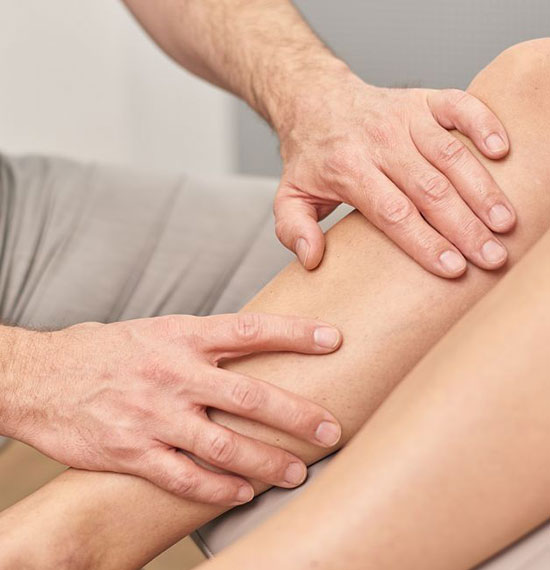

Treatment with the classic surgical method (vein stripping)
This is well known among the general public Classic surgical method is generally no longer necessary nowadays. However, it should be mentioned here for the sake of completeness: a skin incision is made in the groin and the site where the varicose vein joins the deep vein is severed (known as a crossectomy). The varicose vein is then threaded onto a probe and pulled out of the leg (known as stripping of the truncal vein). Additionally existing, smaller varicose veins are removed from the tissue via tiny skin incisions of only 1 to 2 millimetres in length through a Crochet method removed. The wound in the groin is sutured at the end of the operation. The other smaller skin incisions are closed with staple plasters after the procedure and are generally not sutured.
In all procedures, any varicose veins that remain after the removal of the varicose veins are healthy veins the function of the removed veins. Varicose veins can therefore be treated in many different ways. Whether Remove without cutting, the first aid for pain or simple prevention are already effective - please contact us for a possible treatment or consultation.
Frequently asked questions on the topic of "varicose veins"
The word „varicose vein“ comes from „varicose vein“, i.e. a dilated and tortuous vein running under the skin. There are both external and internal varicose veins on the legs. Internal varicose veins cannot be recognised with the naked eye, but often have a much greater impact on the health of a leg than visible external varicose veins. Internal varicose veins, so-called insufficient truncal veins (large or small rose veins), can only be diagnosed with an ultrasound examination. There are also so-called „spider veins“, small dilated veins lying in the skin, which take their name from their resemblance to the former spider veins. Only a certain amount of varicose veins on the leg can be seen with the naked eye and only an ultrasound examination by a phlebologist or vascular surgeon reveals the full extent of the disease.
The classic stripping operation of the truncal vein with a surgical incision in the groin is no longer necessary today, although it is still frequently performed. The method of first choice for treating the deeper trunk vein (great saphenous vein, saphenous vein parva, anterior saphenous vein) today is always a minimally invasive procedure, as it is actually always possible. The laser has increasingly replaced the radio wave in recent years, as its range of application is broader and the permanent closure rate is better in many studies.
As varicose veins are a disease (ICD 10), health insurance companies (statutory and private) cover the costs of treatment. However, as a private doctor, patients with statutory health insurance are self-payers and statutory health insurance does not cover the costs of private medical treatment. Private patients are fully reimbursed for the costs of their treatment by their health insurance company. In general, statutory health insurance companies do not cover the costs of polidocanol foam sclerotherapy, regardless of the doctor. Minimally invasive therapy of the truncal vein using laser or radio waves is covered by some statutory health insurance companies with certain panel doctors. As a patient with statutory health insurance, you should ask your health insurance company whether and with which doctors they have a treatment contract for the respective minimally invasive therapy procedure.
The most gentle and therefore the treatment of choice are the so-called minimally invasive endovenous procedures (performed in the lumen of the vein) for the treatment of deep-seated truncal vein weakness (insufficiency). These minimally invasive procedures include laser ablation, radiofrequency closure, adhesion with cyanoacrylate (vein glue) and sclerotherapy with foamed polidocanol (foam sclerotherapy). All of these procedures have the decisive advantage that they do not require a skin incision but only a small puncture through the skin (similar to a blood sample) to close the diseased truncal vein from the inside out. This harmonises the blood flow from the leg to the heart, as blood can no longer flow back in the diseased vein with the force of gravity in the leg. The affected truncal vein is not removed traumatically by classic extraction (so-called „stripping“), but gently closed from the inside and the body breaks down the vein treated in this way in the months following the treatment. Currently, laser ablation is the procedure of choice. However, the veins visible from the outside cannot be treated with laser, radio wave or vein glue, as the catheters required for this cannot be inserted through the tortuous veins running under the skin. These varicose veins are either gently removed using a mini-phlebectomy according to Varady („crochet method“) via very small skin incisions or alternatively sclerosed using polidocanol foam sclerotherapy. In terms of the cosmetic result, the crochet method is usually the procedure with the better result, as foam sclerotherapy can lead to stubborn brownish discolouration (hyperpigmentation) later on. After a minimally invasive procedure - including a mini-phlebectomy - the patient is immediately mobile and can return to work on the same day if necessary. Many patients walk several kilometres on the day of the operation. Sport is usually possible again the day after the procedure and the entire post-operative course is very painless.
After minimally invasive varicose vein treatment with laser and / or a mini-phlebectomy (crochet method), the patient is fit immediately after the procedure. The procedure is performed under local anaesthetic whenever possible for the patient. Most patients walk several kilometres the same day after the operation and should also get plenty of exercise. Sport can usually be resumed the next day. Depending on the occupation, the patient can return to work immediately or may be restricted for a few days if the patient is predominantly sedentary. A compression stocking to reduce post-operative discomfort is optionally recommended for 1 week after the operation - but does not have to be worn. These are all major differences compared to classic stripping surgery.
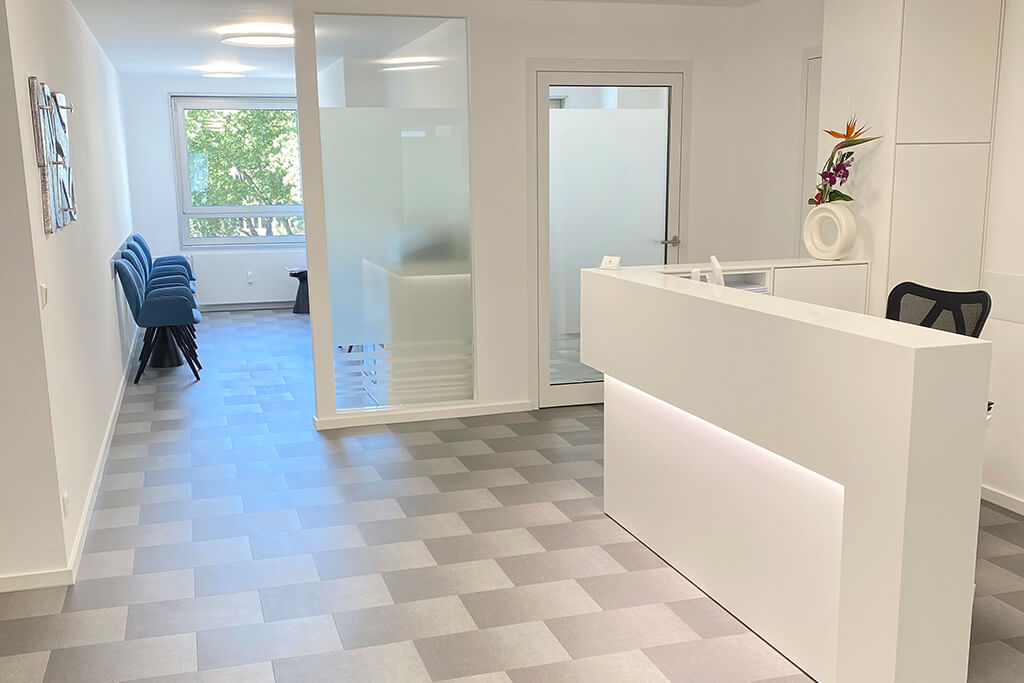
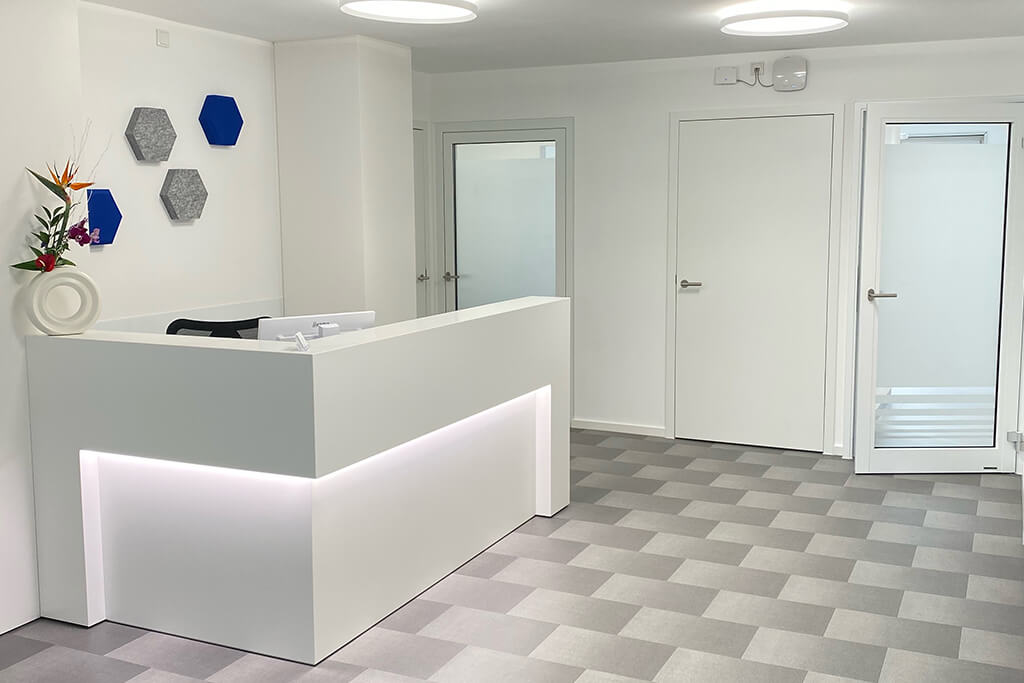
Impressions of the practice