




Your expert for lipoedema
What is „lipoedema“?
Lipoedema is a Fat distribution disorder of the fatty tissue with emphasis on the Upper and lower leg, the Hips and occasionally also the Poor. The subcutaneous fatty tissue is painful and sensitive to touch. It is suspected that Hormonal trigger for the development of lipoedema. For example, lipoedema can develop during the first menstrual periods, after pregnancy or with the onset of the menopause.
The two American physicians Allen and Hines first described the typical appearance of increased fatty tissue on the legs, which occurs almost exclusively in women, in 1940 and gave it the name „Lipoedema“. Unfortunately, this term is misleading, as lipoedema does not involve oedema in the true sense of the word - i.e. no water retention in the fatty tissue.
Very rarely, men can also be affected by lipoedema.
Diagnostics
The physical appearance is characterised by a Increase in subcutaneous fatty tissue on the legs and Hips or on the arms in combination with a slim waist or a slim upper body. There is often a Difference in dress size between the upper and lower body of up to two sizes. However, there are also patients who do not have any major fat distribution disorders but still suffer from lipoedema because they have Pain in the subcutaneous fatty tissue of the extremities. Women of normal weight with a normal BMI can also develop lipoedema.
Important for the diagnosis of „lipoedema“ is the Presence of pain in the subcutaneous fatty tissue. If there is no pain, it is a simple fat distribution disorder of the subcutaneous fatty tissue, known as lipohypertrophy. The fat distribution pattern is often inherited. Bruising can occur spontaneously, but does not have to. According to the current state of research, the painfulness of the subcutaneous fatty tissue in lipoedema results from a Inflammatory reaction in fatty tissue. Fine tissue examinations of liposuctioned fat tissue from lipoedema patients have shown increased inflammatory cells between the fat cells.

Lipoedema is often categorised as Stages I-III categorised:
Sstage I: Smooth skin surface
Stage II: uneven skin surface
Stage III: Overhanging fat
However, this categorisation is very subjective and often does not reflect the patient's symptoms. For example, there are patients with advanced stage III lipoedema (fat aprons) who have very little pain and patients with only a slightly increased body weight (stage I) but significant symptoms.
Can imaging examinations detect lipoedema?
No. Regardless of whether you have lipoedema or are just overweight - the fatty tissue always looks the same on ultrasound or MRI. Both examinations are therefore not helpful for Diagnosis of lipoedema. In addition, in the case of pure lipoedema, both ultrasound and MRI No water retention in the fatty tissue in the sense of „oedema“.
Important is the Ultrasound but nevertheless: With it, a Deep-seated venous insufficiency or Varicose veins can be ruled out as another cause of swollen and painful legs. An ultrasound examination of the leg veins is therefore a standard part of lipoedema diagnostics and is also carried out regularly in my consultation hours.
Lipoedema symptoms
Lipoedema is always accompanied by symptoms, but these can vary from person to person and this is often the difficulty in making a medical diagnosis. In most cases, there is spontaneous pain in the affected extremity or pain when touched, e.g. by a partner. Children or pets sitting on the lap can also trigger symptoms.
Treatment options for lipoedema
There is currently a Change in perspective on lipoedema and its therapy.
The fact that there is still no evidence of fluid in lipoedema suggests a Manual lymphatic drainage for decongestion of the fluid in the fatty tissue, as it is often prescribed, as not useful appear.
The situation is different with the wearing of Compression underwearAlthough this cannot „push away“ the excess fatty tissue, it can significantly alleviate the patient's symptoms, as compression can reduce inflammatory processes and thus alleviate pain. This also supports the theory that inflammation of the subcutaneous fatty tissue is the cause of pain in lipoedema.
The central Therapy in lipoedema consists of a Body weight control by controlling the calorie intake and ensuring a sufficient physical exercise. Diets are counterproductive as they usually increase body weight permanently due to the yo-yo effect. It makes sense to Sustainable change in diet, if required, including nutritional counselling.
Plenty of physical exercise and Sport - preferably for Muscle building, to increase the daily basal metabolic rate - are also important. Muscle building and sport do not necessarily have to take place in a fitness centre, even in a gym. Exercising with your own body weight at home or outdoors builds up muscles.
If these measures do not lead to an improvement in the symptoms or if stubborn problem areas of fat distribution remain, these can be treated by a Liposuction (Liposuction) with a very good chance of success.
Liposuction (liposuction)
What happens during liposuction?
During liposuction, regions with excess and painful fat are removed. Subcutaneous fatty tissue is tackled surgically. The fat inside the abdominal cavity cannot be suctioned out, only the subcutaneous fat. Fatty tissue under the skin is accessible to suction. During liposuction, a thin suction cannula is inserted via a small Skin incision of just under 0.5 cm in length is inserted under the skin at the desired location and the excess fatty tissue is suctioned out. There are various surgical techniques; in my practice, depending on the patient's wishes, both the Water-jet assisted liposuction (WAL) as well as the Vibration-assisted liposuction (PAL, from English. Power-Assisted Liposuction) - I prefer to use PAL, as I consider it to be the most gentle method currently available for Excess fatty tissue under the skin.
With the PAL, the cannula High-frequency vibration movements which break down the fatty tissue into smaller particles and mobilise the surrounding lymphatic channels as well as the lymphatic vessels. Protect nerves and blood vessels. With the WAL, a liquid emerges from the cannula Fine water jet the fatty tissue to gentle way and also protects the surrounding structures. The shredded fatty tissue is then suctioned out via the cannula in both procedures.
The procedure can be performed very well under local anaesthesia The anaesthetic is added to the water jet. At the patient's request, it is of course also possible to perform the procedure under general anaesthetic together with an anaesthetist. In order to achieve rapid recovery after liposuction, it is often advisable to reduce the total amount of fat tissue to be removed to several sessions and to distribute each intervention only 1-2 different zones suck off. Further information: Liposuction Düsseldorf
What happens to the liposuctioned fat tissue?
If desired, the liposuctioned fatty tissue can also be other body regions - such as breasts or buttocks - be transplanted (so-called fat transfer or „lipofilling“). Also a Fat transfer to the face is possible. In order to allow the fat cells to grow in the new location, only up to 250 ml of fat cells should generally be inserted per body region.
What is the course after liposuction?
Depending on the area of the body that has undergone liposuction, you should Wear compression underwear during the day and at night. Immediately after the procedure are you Immediately mobile and can usually resume their daily routine within the first few days. Showering is possible the day after the procedure. The skin incisions are closed with adhesive plasters. You heal in the following 2-3 weeks usually heal without any problems and later leave only very small scars, which are often no longer noticeable.
When and for whom does liposuction help?
Liposuction is not a panacea for obesity. In the case of massive obesity, it is initially advisable to reduce body weight by Change of diet and Physical exercise to reduce. If areas remain that are still painful or visually unpleasant (so-called „problem areas“), these can be specifically removed by liposuction.
The weight loss process can often be supported by liposuction in its various phases to make it easier for the patient to lose weight.
The Liposuction (liposuction) is therefore Part of an overall concept, whose central components are a change in dietary habits and sufficient physical activity.
Treatment of lipoedema in my practice
Costs for liposuction according to GOÄ
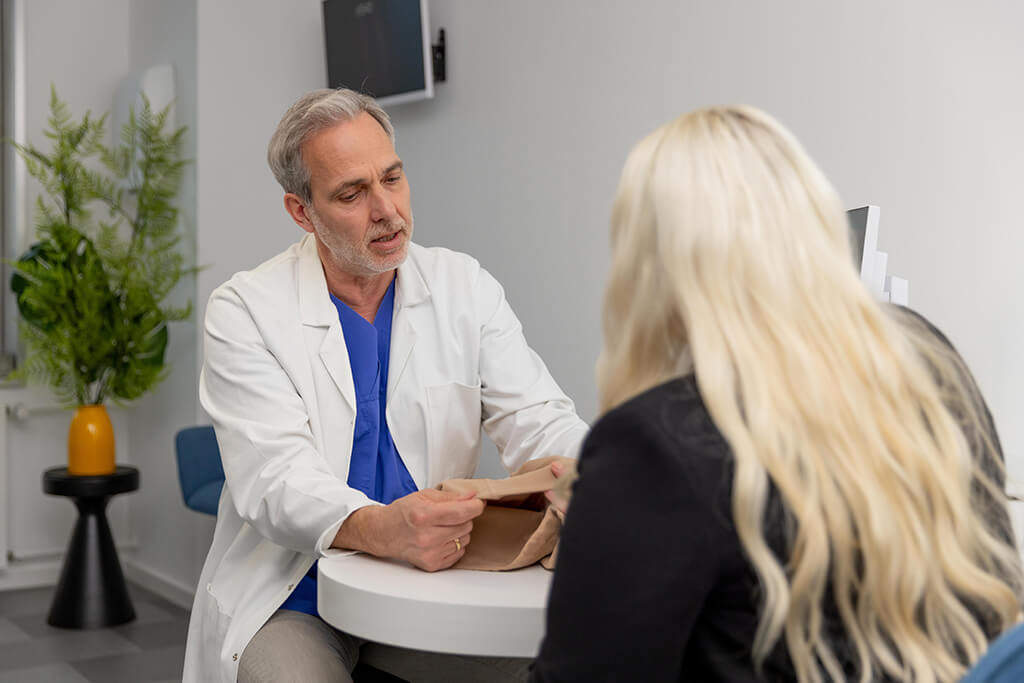
Counselling interview
-
approx. 40,- € without ultrasound of the leg veins
We would like to point out that we are legally obliged to charge for counselling services
Liposuction 1 region
Water jet technology WAL
- Riding breeches (outer thigh)
- Inner thigh
- Knee
- Upper abdomen
- Lower abdomen
- approx. 2.200,- € per region / both sides / local anaesthesia
Liposuction 2 regions
Water jet technology WAL
- Inner thigh and front with knee
- Outer thigh and back
- Upper abdomen and lower abdomen
- approx. 3.800,- € / both sides / local anaesthetic
Liposuction of the lower leg
Water jet technology WAL
- Calves
- Shinbone
- Shackles
- approx. 4.800,- € / both sides / local anaesthetic
Lipotransfer of a region
Fat grafting / lipofilling
- Breasts
- Po
- approx. 1.000,- € per region / both sides / local anaesthesia
- too. Costs for liposuction
Costs of liposuction
As the amount of fat to be suctioned off and the regions to be suctioned off vary from patient to patient, only approximate prices can be given here. Invoicing is always transparent and comprehensible in accordance with the German Medical Fee Schedule (GOÄ).
Counselling interview
approx. 170,- Euro with ultrasound of the leg veins for lipoedema and approx. 50,- Euro without ultrasound for lipohypertrophy.
We would like to point out that we are legally obliged to charge for the initial consultation.
Region 1
Front of the thigh and inside with knee joint on both legs under local anaesthetic.
Region 2
Outer thigh (saddlebags) and back on both legs under local anaesthetic.
Region 5
Abdominal wall (upper and lower abdomen) under local anaesthetic.
Other regions: Price on request
Fat grafting into a region
Lipofilling
- Breasts
- Po
- Hip Dips
plus costs for liposuction
Simultaneous skin tightening
With argon plasma or laser immediately after liposuction (recommended).
All prices are exclusive of VAT, as lipoedema is a medically indicated procedure that is exempt from VAT.
All prices are for a procedure under local anaesthetic. If you require an anaesthetist, additional costs will be incurred for the anaesthetic.
The respective price includes 1 compression girdle. You will receive the girdle from us based on your body measurements, which we will determine on the day of the operation.
As I work purely as a private doctor, the costs of an operation performed by me will not be reimbursed by the statutory health insurance companies if you have statutory health insurance. If you have private insurance or are entitled to a subsidy, you should enquire about the assumption of costs by your health insurance or subsidy office before the operation on the basis of a cost estimate, which I will be happy to provide you with.
Does health insurance cover the costs of liposuction?
The Federal Joint Committee (G-BA) decided in 2019 that the costs of liposuction should initially be calculated in a pilot study. Only in stage III in selected patients are covered by the statutory health insurance funds. Basic requirement for inclusion in the study is a BMI up to a maximum of 40 kg/m2 and a Unsuccessful six-month conservative therapy. The indication for liposuction must be provided by a plastic surgeon or a specialist surgeon in order for the costs to be covered by statutory health insurance.In the case of liposuction by a private doctor, the costs of the treatment are generally not covered by statutory health insurance.
Further information on lipoedema
Symptoms
Stadiums
Treatment
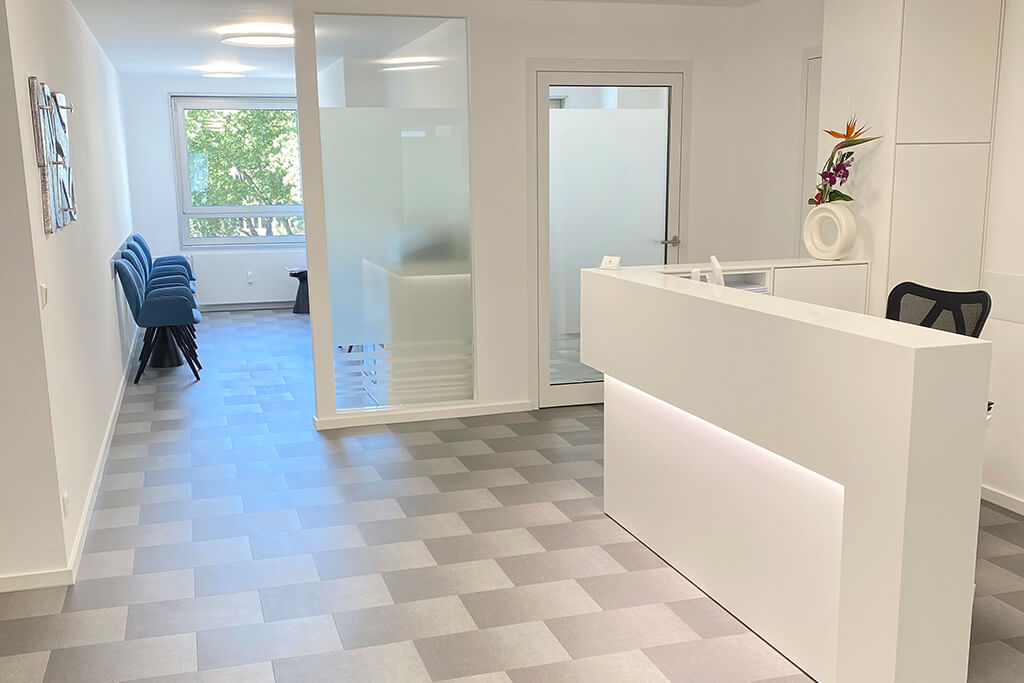
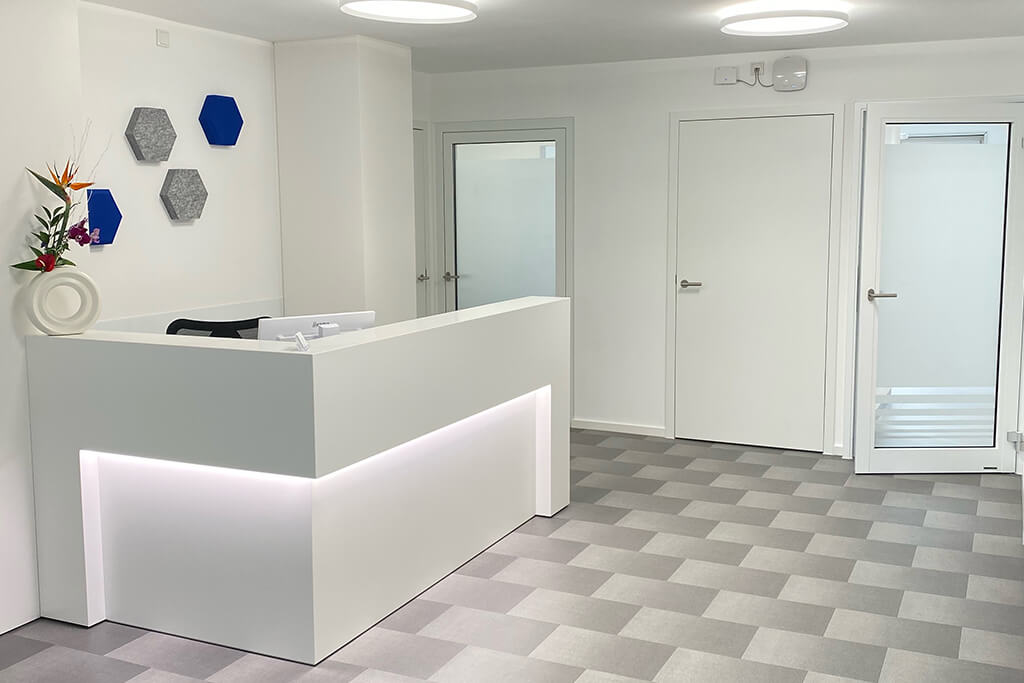
Impressions of the practice