Appointments by phone
Monday, Tuesday, Thursday 9:00 a.m. to 7:00 p.m.

Office hours
Wednesday, Friday 9:00 a.m. to 2:00 p.m.

and by appointment

Carotid artery

Stroke prevention

A sudden circulatory disorder or acute vascular occlusion in the brain very often results in a stroke. The sensitive brain tissue is highly dependent on oxygen, and serious neurological damage can quickly occur.

Diagnostics

Dr. Kusenack – Private Practice for Vascular Surgery Düsseldorf – Ultrasound Examination of the Carotid Artery

Ultrasound examination of the carotid artery

Approximately 20% of all strokes in Germany result from a narrowing of the carotid artery. Parts of a deposit in the carotid artery are carried along with the bloodstream and transported to the brain or eye, where they block the blood flow.
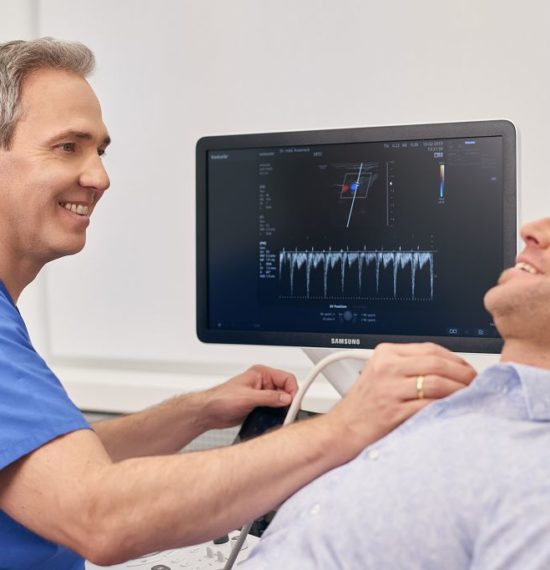
Fortunately, the carotid artery can be examined very effectively for stenosis (narrowing) using ultrasound, and this should be recommended for everyone with certain risk factors. This is even more important if classic symptoms of circulatory disorders in the brain or eye have already occurred: short-term blindness in one eye for several seconds (amaurosis fugax), weakness or paralysis in an arm or leg, or acute speech disorders.

These can be warning signs of an impending stroke and should always prompt immediate contact with an acute care hospital—ideally one with a specialized neurology department and an affiliated stroke unit.

The carotid artery is examined using ultrasound, which is a safe procedure. This allows doctors to determine whether there is already severe calcification caused by arteriosclerosis. If there is a significant narrowing of the vessel diameter of more than 70%, surgery on the carotid artery or dilation of the artery with stent implantation may be necessary to reduce the risk of stroke.

Dr. Kusenack – Private Practice for Vascular Surgery Düsseldorf – Consultation on Carotid Artery Stroke

Frequently asked questions about the carotid artery

An examination of the carotid artery for narrowing is always recommended if there are significantly elevated fat levels in the blood or if there are corresponding symptoms originating from the carotid artery. These include, for example, visual disturbances in one eye with temporary blindness, paralysis or numbness in a limb, word-finding difficulties, etc. There is no official age limit for carotid artery examinations.

The examination of the carotid artery takes only a few minutes and is performed on the patient while awake and lying down. The ultrasound device provides a clear view of the artery in the neck and allows the extent and significance of any narrowing or deposits in the carotid artery to be assessed.

The examination is not painful. I will then explain the findings in detail and provide recommendations for treatment.

For patients with statutory health insurance, the costs of an examination of the carotid artery by me as a private physician are not covered. In this case, the patient is responsible for the costs, and the cost of a bilateral examination with subsequent discussion of the findings is approximately $150. For private patients, the costs are covered by private health insurance companies if there are corresponding complaints. In the case of a purely preventive examination at the patient's request, this is an IGeL service and the cost coverage should be clarified with the health insurance company in advance.

A narrowing of the carotid artery can lead to visual impairment with temporary blindness in one eye for several seconds or minutes (known as amaurosis fugax = temporary blindness). In addition, unilateral paralysis or sensory disturbances in one limb may occur. Word-finding difficulties, speech disorders, reading disorders, or a drooping corner of the mouth on one side may be further indications of symptomatic narrowing of the carotid artery and thus an impending stroke. If the symptoms described resolve spontaneously within 24 hours, this is referred to as a TIA (transient ischemic attack).

The ultrasound examination of the carotid artery is painless and involves no risk. It is performed in a relaxed atmosphere, taking into account any positioning difficulties in the cervical spine when turning the head to one side.

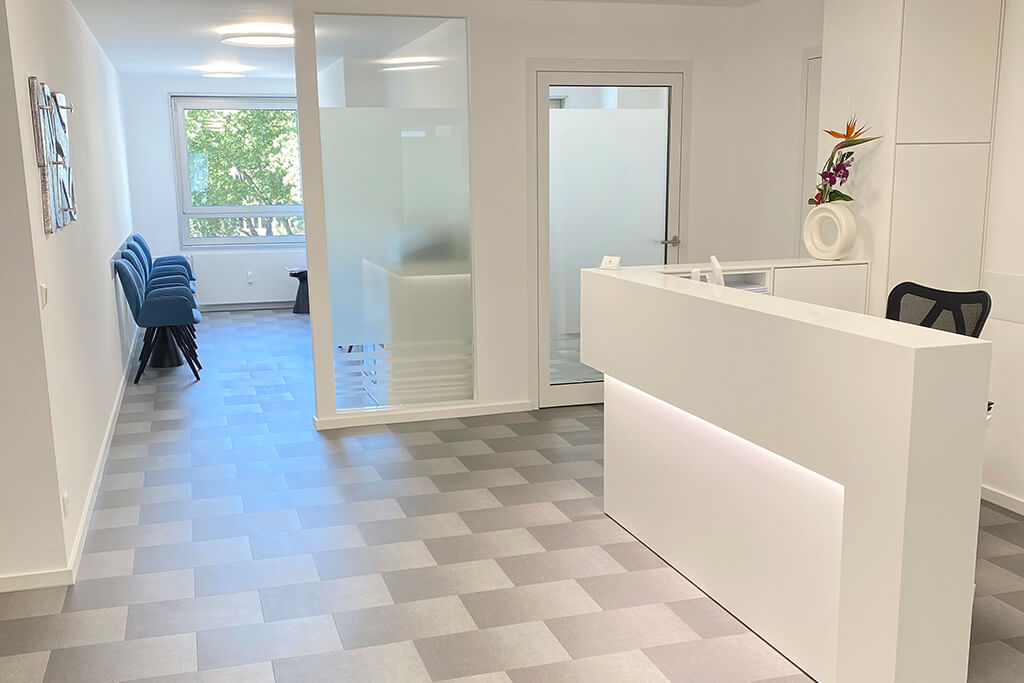
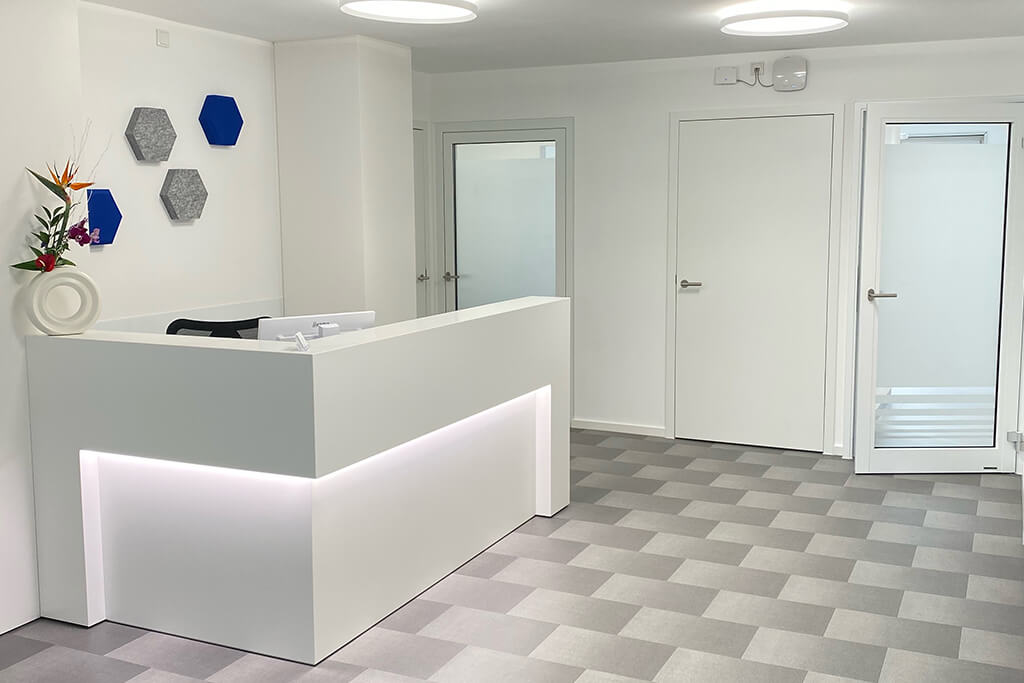
Impressions from practice