Make an appointment by telephone
Monday, Tuesday, Thursday 09:00 until 19:00

Office hours
Wednesday, Friday 09:00 until 14:00

and by arrangement

Circulatory disorders

intermittent claudication and
Circulatory disorders

One of the most common circulatory disorders of the legs is Intermittent claudication. This is due to the Progressive calcification of arteries to form constrictions (stenoses), which are the cause of the symptoms. The medical term for this is „peripheral arterial occlusive disease“, in short PAD. The term "intermittent claudication" has become established in the vernacular, as those affected are unable to walk for a certain distance due to Increasing pain or cramps in the legs have to stand still and look at the shop window displays. Some patients also describe the symptoms as „Feeling like the calf is being locked in a clamp“. The pain is caused by a lack of oxygen in the stressed leg muscles, as the blood can no longer supply the muscles with sufficient oxygen due to the existing vasoconstriction. The symptoms mainly occur in the calves and thigh muscles, occasionally also in the gluteal muscles. As the condition progresses, it can lead to pain even at rest - in the worst case, there is even a risk of losing the leg.

Different stages according to the Fontaine classification

According to Fontaine, intermittent claudication is divided into four different stages:

Intermittent claudication - Stage 1 - Venenheilkunde Düsseldorf Practice for Phlebology
In stage I there are no symptoms despite existing vascular constrictions.
Intermittent claudication - Stage 2 - Venenheilkunde Düsseldorf Practice for Phlebology
In stage II a/b, there is already noticeable pain in the leg when walking a distance of over/under 200 metres.
Intermittent claudication - Stage 3 - Venenheilkunde Düsseldorf Practice for Phlebology
In stage III, pain occurs even at rest and without exertion - primarily at night.
Intermittent claudication - Stage 4 - Venenheilkunde Düsseldorf Practice for Phlebology
In stage IV, tissue dies off with necrosis and smaller wounds on the foot or lower leg no longer heal. The vernacular has coined the term „smoker's leg“ for this.

The therapy

Intermittent claudication and circulatory disorders - Phlebologist specialising in vein treatment in Düsseldorf

Combined treatment of intermittent claudication

For the treatment of intermittent claudication there are several possibilities:

The basic approach of all forms of therapy is to take blood-thinning medication, that improve blood flow. The most important medication in this context is acetylsalicylic acid taken once a day in combination with a fat-lowering agent, the Statin.

There is also a Movement and gait training, to continuously improve the pain-free walking distance. This is usually offered by vascular sports and PAD self-help groups.

I will be happy to provide you with the contact details in your local area - talk to me.

If this is not sufficient for the Complaint alleviation an invasive catheter examination (angiography) with dilatation of the constricted area (balloon PTA) or a reaming of the occluded vessel (so-called arterectomy) can be considered. A stent („vascular support“) may then be inserted to keep the vessel open for longer.

The third option is a Operation, in which the vessel is treated with a peeling and widening procedure (so-called patchplasty). cleaned or a bypass is created from the patient's own body vein or plastic to bypass the vascular occlusion, which is usually longer.

A conversion of the Lifestyle and diet and a Stop smoking should definitely be added - sometimes the most difficult part of the entire therapy. Regardless of the stage of the circulatory disorder or the therapy you have chosen, the following applies:

If it is successful, you gain first and foremost mobility and thus a large part of your quality of life back.

Dr Kusenack - Private practice for vascular surgery Düsseldorf - The practice

If this is not sufficient for the Complaint alleviation an invasive catheter examination (angiography) with dilatation of the constricted area (balloon PTA) or a reaming of the occluded vessel (so-called arterectomy) can be considered. A stent („vascular support“) may then be inserted to keep the vessel open for longer.

The third option is a Operation, in which the vessel is treated with a peeling and widening procedure (so-called patchplasty). cleaned or a bypass is created from the patient's own body vein or plastic to bypass the vascular occlusion, which is usually longer.

A conversion of the Lifestyle and diet and a Stop smoking should definitely be added - sometimes the most difficult part of the entire therapy. Regardless of the stage of the circulatory disorder or the therapy you have chosen, the following applies:

If it is successful, you gain first and foremost mobility and thus a large part of your quality of life back.

Frequently asked questions on the topic of "intermittent claudication (PAD)"

The first signs of intermittent claudication (PAD = peripheral arterial occlusive disease) are pain in the calf or in the thigh or buttock muscles when walking after a certain distance. Some patients also have the feeling that their calf is clamped in a vice (clamp). Due to the arterial circulatory disorder, the leg or buttock muscle does not receive enough oxygen under strain and this lack of oxygen causes pain in the muscle - a kind of muscle soreness - which ultimately forces the patient to stop. As affected people often pretend to be looking in the window of a shop (but in reality stop because of the muscle pain), this condition has been given the name „shop window disease“.

Firstly, the patient's symptoms are recorded in an initial consultation and then the pulses in both legs are palpated during the physical examination. This is followed by a so-called Doppler occlusion pressure measurement, in which the blood flow in both arms and legs is measured using a blood pressure cuff and the measured values are compared with each other. In a healthy person, the blood pressure measured in the legs is higher than in the arms or at least the same, while in a sick person it is lower than in the arms. Finally, a special vascular ultrasound (so-called duplex) is used to visualise the vessel directly with imaging and examine it for possible calcifications or constrictions.

Exercise, and therefore sport, is an essential therapeutic pillar in the treatment of PAD in stage I or II. Sufficient physical exercise and, ideally, intensive walking training as part of a self-help group mean that blocked arteries can be bypassed without intervention and in a natural way by the formation of new blood vessels (natural bypass). The first successes of walking training are usually seen after 3 months. However, it is important to stop smoking completely, as nicotine quickly closes the newly formed small blood vessels and thus cancels out the effect of the gait training. In addition, it is advisable to take a platelet aggregation inhibitor once a day to minimise the risk of blood clots forming on the narrowed blood vessels.

PAD (peripheral arterial occlusive disease) is categorised into four stages:

In stage I, there is no discomfort in the legs when walking, although circulatory disorders are already present. This is initially harmless for the patient, but can also be an indication of circulatory disorders in the heart, for example, and should therefore be investigated further. Stage II is known as intermittent claudication, in which pain occurs in the muscles of the leg after walking a certain distance, usually in the calf, forcing the patient to stop. Stage II is further subdivided into stage IIa (pain-free walking distance > 200 metres) and stage IIb (pain-free walking distance < 200 metres). Stage III is characterised by pain at rest, i.e. the patient has pain in the leg, especially at night when lying down, and has to let the leg hang out to relieve the pain. And in stage IV, there are open areas of skin that no longer heal. In stages III and IV, treatment is absolutely necessary to prevent the loss of the leg due to the threat of amputation. In stages I and II, there is a so-called life-style treatment indication, i.e. the patient's level of suffering determines whether treatment should be carried out or not.


The treatment spectrum for intermittent claudication ranges from intensive walking training with cessation of smoking to taking blood-thinning medication and catheter examination of the vessels with balloon dilatation (PTA) and stent insertion (so-called intervention) or surgical treatment procedures. The decision on which treatment method to use is based on the type and length of the vascularisation and the patient's wishes. In an intervention, the calcifications are pushed away or removed using a catheter and a balloon or a vascular cutter and then held open with a stent if necessary. During an operation, the calcifications are removed from the vessel or bypasses are created to bypass a long-segment blocked blood vessel.

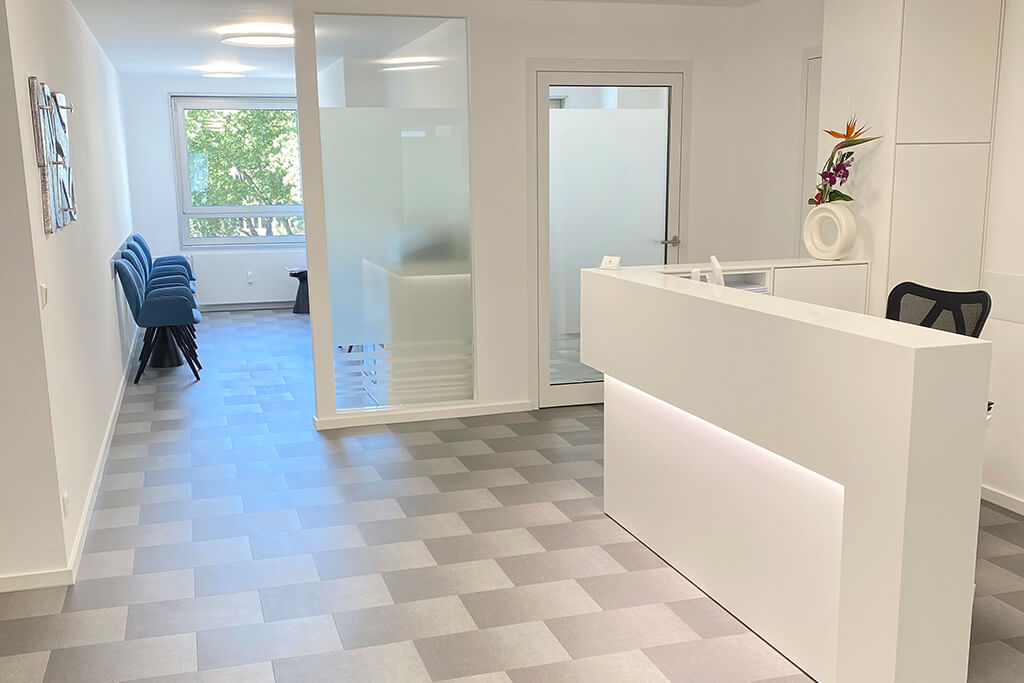
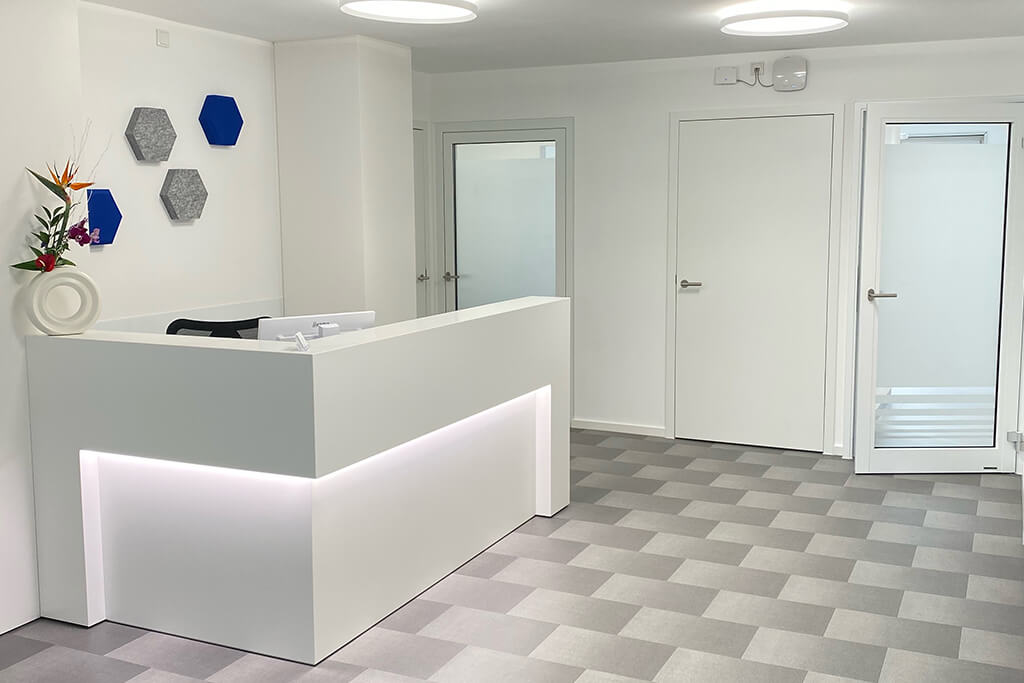
Impressions of the practice