


Liposuction in Düsseldorf and the surrounding area.
Your path to liposuction
well-founded & informed decisions
well-founded & informed decisions
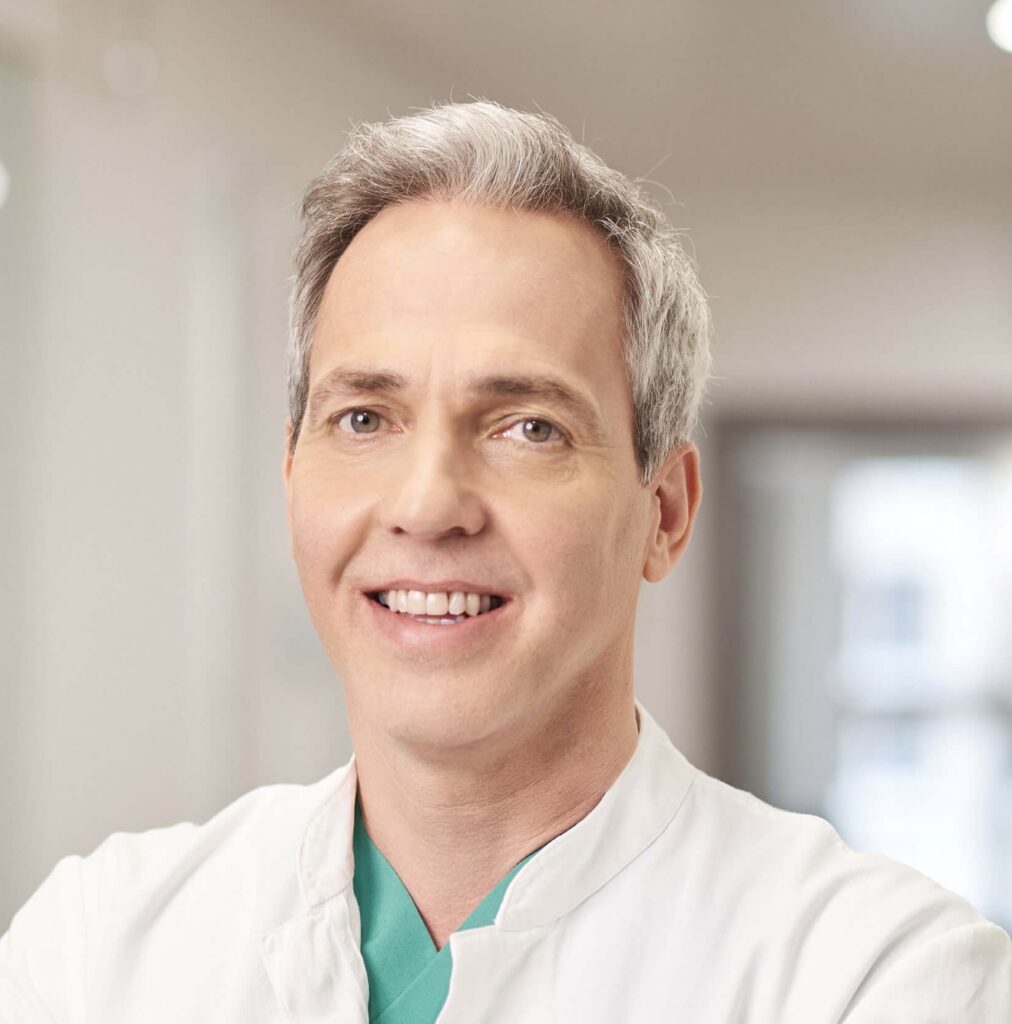
Welcome to my Düsseldorf Private practice for liposuction. As Specialist for surgery with over 25 years of operational experience I am there for you with my expertise. It is particularly important to me to provide you with comprehensive advice and information about liposuction before we tackle your individual aesthetic goals together. Your health and satisfaction are always my top priority.
Free of charge E-mail guide
on the subject of liposuction
Liposuction is not a spontaneous decision - and that's a good thing. That's why I would like to support you with sound knowledge: From the medical basics, safety and recovery time to your personal invitation to a consultation.
- 8 free advice emails on the most burning questions about liposuction
- From information to the decision
- Medical knowledge, clearly explained
- Your pace, your decision
1
Why your discipline is sometimes not enough
The biological explanation for stubborn fat deposits - and why it's not you.
2
Safety through vascular surgery expertise
What liposuction really means and why the choice of doctor is crucial.
3
No fear of dents or sagging skin
How modern body contouring techniques ensure firm, natural results.
4
Honest answers about recovery time
How quickly you are fit again - without embellishment, but also without drama.
5
The myth check: Is the fat coming back?
What science says about the durability of liposuction.
6
A whole new attitude to life
Why the biggest change is often not in the mirror, but in the mind.
7
Naturalness as the top priority
Why nobody will ask which doctor you saw.
8
The next step
Your invitation to a non-binding consultation in Düsseldorf.
Register now for free
Your first step towards more clarity
Your registration could not be saved. Please try again.
Your registration was successful.
🔒 Your data is safe with us.
When and for whom does liposuction Düsseldorf help?
Liposuction can be useful for anyone who is struggling with stubborn fat deposits and finds them annoying. Whether it's small problem areas or larger areas - if dieting and exercise don't bring the desired results, liposuction offers the opportunity to shape your body to your liking.
Liposuction is successfully used both for aesthetic liposuction and for medical indications such as lipoedema. However, it is important to realise that liposuction is not a panacea for obesity. If you are massively overweight, it makes sense to first reduce your body weight by changing your diet and exercising. If there are still areas remaining that are still perceived as problematic, these can be specifically treated with liposuction in Düsseldorf.
Liposuction can also support the weight loss process by being used in different phases of weight loss. This makes it easier for many patients to achieve their aesthetic goals and motivates them to maintain their new lifestyle.

I listen to you and take my time,
necessary for a comprehensive investigation.
Dr Kusenack
Liposuction Düsseldorf:
Liposuction explained simply:
What happens with a
Liposuction?
Liposuction?
What happens to the
of liposuctioned fat tissue?
of liposuctioned fat tissue?
What is the course after a
Liposuction?
Liposuction?
Liposuction: Short
Explanatory animation
Explanatory animation
What happens during liposuction?
During liposuction, excess fat deposits under the skin are removed in a targeted manner. The treatment concentrates on the subcutaneous fatty tissue, which is suctioned out through a small incision (approx. 0.5 cm) using a fine suction cannula. It is important to note that fat inside the abdomen cannot be treated, only the fat under the skin.
In my Düsseldorf practice, I use modern and particularly gentle techniques - preferably vibration-assisted liposuction (PAL). Power-Assisted Liposuction), and water-jet assisted liposuction (WAL) on request. In PAL, high-frequency vibration movements of the cannula break down the fatty tissue into smaller particles; in WAL, a fine water jet takes over this task. Both procedures are gentle on important structures such as nerves, lymph channels and blood vessels. The fat is then gently suctioned out and, if necessary, the skin is tightened with a laser or argon plasma to achieve an optimal result.
Liposuction can be performed under local anaesthetic, whereby the anaesthetic is injected directly with the water jet. General anaesthesia is of course also possible on request. In order to promote quick and uncomplicated healing, it is advisable to divide the treatments into several sessions for larger procedures, in which one or two areas are treated at a time.
What happens to the liposuctioned fat tissue?
The fat obtained during liposuction can also be reused on other parts of the body if desired. This is known as fat transfer or “lipofilling”. Popular areas for such a transplant are, for example, the breasts or buttocks, but the face can also be gently modelled by using the patient's own fat cells. However, to ensure that the fat grows successfully in the new location, it is advisable not to transfer too much fat per body region - on the breast, for example, a maximum of 250 ml of fat per side and session.
What happens after liposuction?
Depending on the area of the body treated, you should wear a special compression garment for around 6 weeks, both during the day and at night. You will usually be mobile immediately after the procedure and can return to your normal daily routine after just a few days. It is possible to shower the day after the operation. The small skin incisions are closed with special staple plasters and usually heal completely within 2-3 weeks. In most cases, the scars are minimal and fade after a while so that they are barely visible.
Short explanatory animation
Liposuction Düsseldorf: Personalised care
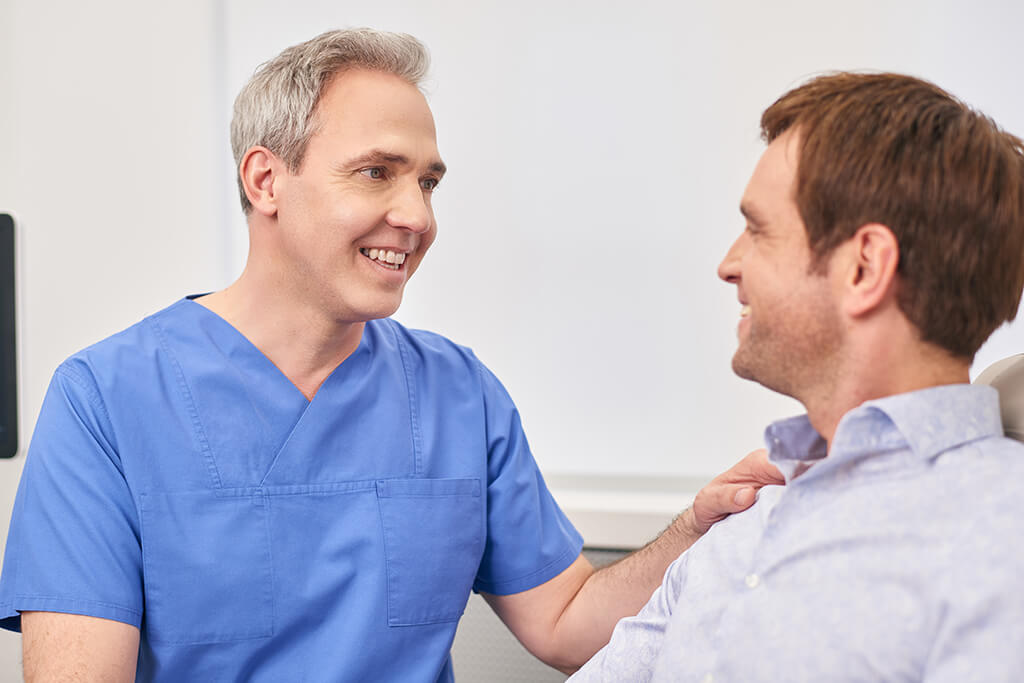
As a specialist surgeon, your health and well-being are always my top priority. In my private practice for liposuction in Düsseldorf, I offer you personalised 1-to-1 care in which you as a person take centre stage.
I take the time to understand your individual needs and work with you to develop the best treatment plan for your liposuction in Düsseldorf. What counts here is not the broad spectrum of standardised offers, but a targeted treatment tailored to you that takes your aesthetic and health goals into account.
Pleasant atmosphere
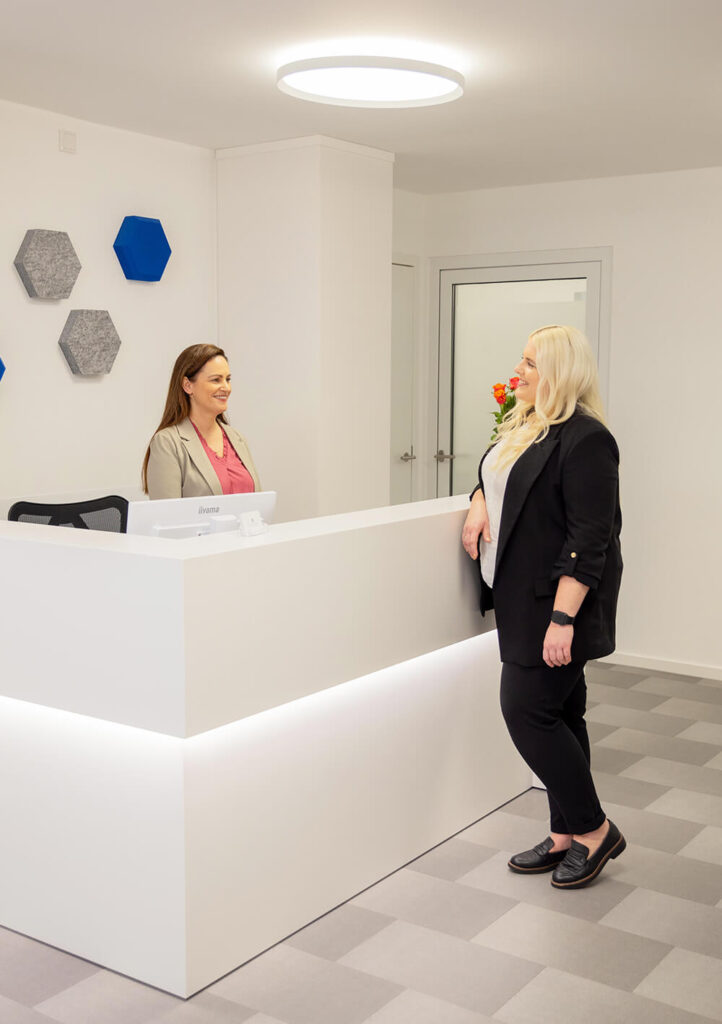
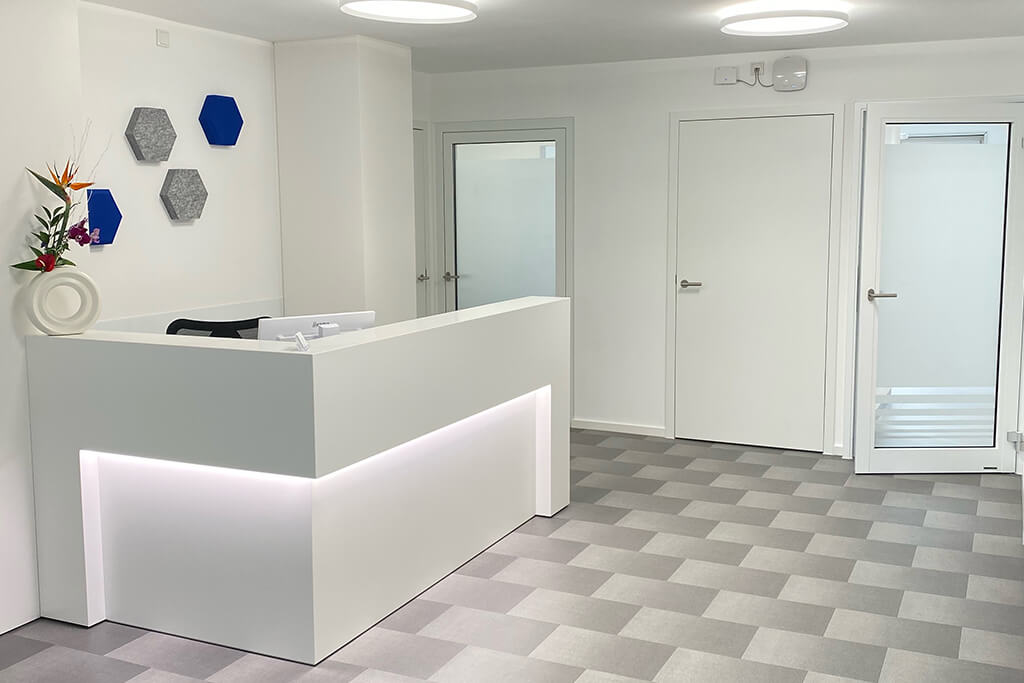
My liposuction practice is centrally located in Düsseldorf and is easy to reach, so you can get to your appointments without any complications. A pleasant atmosphere awaits you here, far away from the hustle and bustle of large clinics. You can be sure that your concerns are in good hands with me and that I will always be at your side personally from the initial consultation to aftercare.
I focus on quality and a trusting doctor-patient relationship when performing liposuction in Düsseldorf. Your health and satisfaction are the most important things to me and I make sure that you feel well looked after at every step of the process.
100% Service - For privately insured persons and those with statutory health insurance on a self-pay basis.
Liposuction Düsseldorf:
Advantages of liposuction with Dr Kusenack
With over 25 years of experience in surgery, I have already helped many satisfied patients achieve a new body image. These many years of surgical expertise are reflected in the high quality standards and my patient-orientated care.
I attach particular importance to state-of-the-art treatment methods that offer maximum safety and achieve the best possible results. The continuous further training of my medical team is a central component of my quality standards.
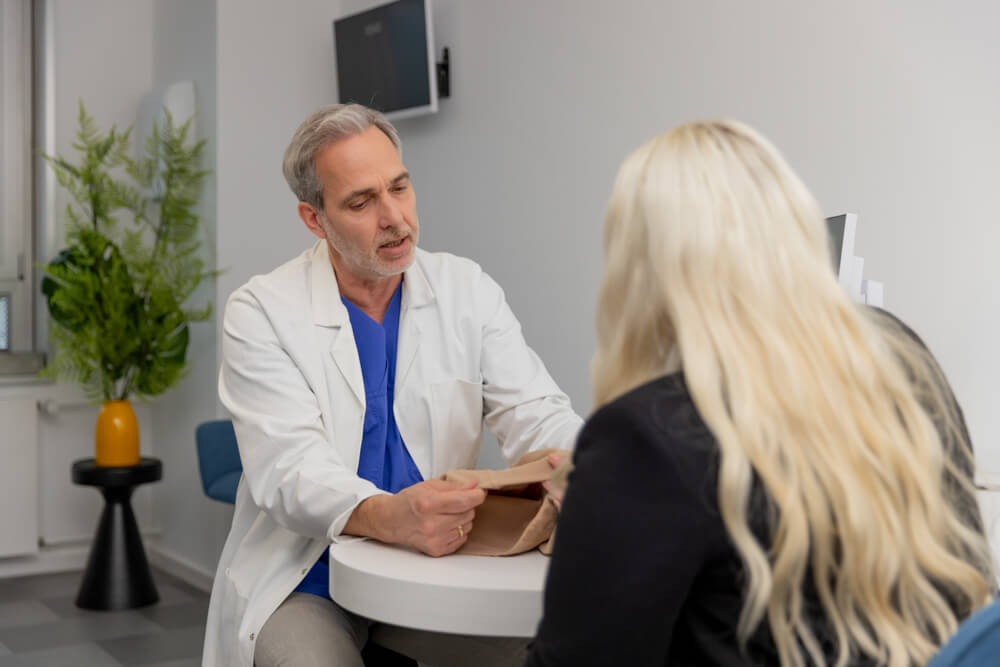
Further advantages of liposuction in my Düsseldorf practice:
Experience and specialisation:
I am a specialist in surgery and a specialist in vascular surgery and have been operating for over 25 years. Thanks to this broad range of surgical activities, I am very familiar with all the anatomical conditions in the area of your body to be liposuctioned.
Individualised support:
I take the time for a comprehensive consultation and accompany you personally through the entire treatment process.
State-of-the-art technology:
I use the latest and most gentle procedures such as water jet technology, laser and argon plasma to ensure optimal results and a quick recovery.
Central location:
My practice is centrally located in the heart of Düsseldorf and is easily accessible from all parts of the city and the surrounding area, both by car and by public transport.
Positive patient reviews:
Numerous satisfied patients confirm the quality and success of my treatments. Please take the time to read my patient reviews carefully.
Transparent pricing:
I offer fair and transparent prices according to the scale of fees for doctors (GOÄ), both for privately insured persons and for those with statutory health insurance on a self-pay basis.
Liposuction Düsseldorf: Treatment regions
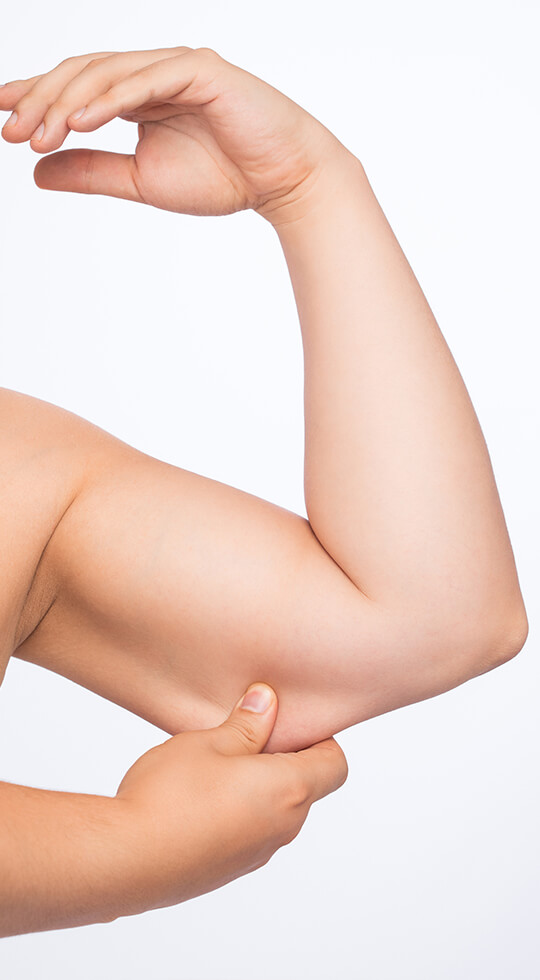
Using the latest medical technology, excess fatty tissue can be effectively removed from various areas of the body. These include the arms, abdomen, back, buttocks and legs. Particularly in women, fat deposits in the typical problem areas such as the thighs (often referred to as „saddlebags“) and arms (so-called „angular arms“) are often treated.
It is important to emphasise that liposuction also has its limitations. It is no substitute for a healthy diet and regular exercise if you are very overweight. However, liposuction is a proven and gentle method of reducing stubborn fat deposits and shaping specific areas of the body.
Cost of liposuction in Düsseldorf
As the amount of fat to be suctioned off and the regions to be suctioned off vary from patient to patient, only approximate prices can be given here. Invoicing is always transparent and comprehensible in accordance with the German Medical Fee Schedule (GOÄ).
Counselling interview
approx. 170,- € with ultrasound of the leg veins.
We would like to point out that we are legally obliged to charge for the initial consultation.
Region 1
Front of the thigh and inside with knee joint on both legs under local anaesthetic.
Region 2
Outer thigh (saddlebags) and back on both legs under local anaesthetic.
Region 5
Abdominal wall (upper and lower abdomen) under local anaesthetic.
Other regions: Price on request
Fat grafting into a region
- Lipofilling
- Breasts
- Po
- Hip Dips
plus costs for liposuction
Simultaneous skin tightening
With argon plasma or laser ("Endolift") immediately after liposuction (recommended).
All prices are subject to VAT, which in the case of a cosmetic procedure is currently 19%. Liposuction for lipoedema is exempt from VAT due to the medical indication.
All prices are for a procedure under local anaesthetic. If you require an anaesthetist, additional costs will be incurred for the anaesthetic.
The respective price includes 1 compression girdle. You will receive the girdle from us based on your body measurements, which we will determine on the day of the operation.
As I work purely as a private doctor, the costs of an operation performed by me will not be reimbursed by the statutory health insurance companies if you have statutory health insurance. If you have private insurance or are entitled to a subsidy, you should enquire about the assumption of costs by your health insurance or subsidy office before the operation on the basis of a cost estimate, which I will be happy to provide you with.
What patients say
Almost 1 year after my lipoedema operation on my legs, I can say: With him again and again! The whole team is SUPER! He is honest and takes a lot of time! The result speaks for itself 🙂 The costs are also completely reasonable
I am writing here for my wife who does not have a Google account.After several consultations with other specialists, my wife decided to have liposuction with Dr Kusenack and can highly recommend him and his wife. Both form a very trusting, comfortable team. From the very first moment you have a feeling of security, you realise that they both have a great deal of experience and carry out their work with passion and dedication. My wife felt very safe and secure. The next appointment has already been made. During my wife's operation, I was allowed to wait for my wife in a very nice, cosy waiting room with catering, which is not a matter of course! Thank you from the bottom of our hearts. See you soon
Went to Dr Kusenack for lipoedema surgery on my upper arms. Very competent and very good doctor. Top result! Takes time for his patients, takes care of them and the lymphatic drainage practice also praised his work very highly, they also knew him from other patients. Nice practice, no waiting times, fair price!
I saw Dr Kusenack about 2 years ago. I underwent liposuction on my arms and legs. I am still happy today.The only thing I can't recommend. NEVER DO A LIPOSUCTION WITHOUT ANAESTHETIC!!!! NOOOOO. I thought: great, I can do it without anaesthetic. Others have already done it, so I'll take it easy.No. Tavor didn't help either. For the 2nd operation, I preferred to pay around €1000 more for the anaesthetic than to go through the whole thing again without it.I also believe that my legs could have been a bit better if I had been under anaesthetic. I just moaned during the operation. It was a long day for everyone involved.My arms are just great. I would go to Dr Kusenack again and again.
I had surgery on my arms (liposuction for lipoedema) with Dr Kusenack about a week ago - and I can say from the bottom of my heart: every doctor should be like this!
I had an incredibly good feeling from the very first consultation. Dr Kusenack took a lot of time, went through all the risks with me step by step and explained everything with a calmness and warmth that immediately gave me confidence. I actually „just wanted to get some advice“ - but after the consultation it was already clear to me: if I have an operation, then only here.
The operation itself was very thorough, sterile and professional - I felt safe and in good hands at all times. I was particularly impressed by how attentive and caring Dr Kusenack was during the entire procedure. He gave me regular explanations and always made me feel that I was in the best hands.
His wife assisted during the operation and was there for me with so much calm, warmth and attention throughout. You immediately realise how lovingly and well-rehearsed the two of them work together - a perfect combination that gave me an incredible amount of security. This harmony characterised the whole atmosphere in the practice and was a huge support for me.
The care I received after the operation was also exceptional. I had slight post-operative haemorrhaging and was allowed to come in late at night for a check-up - which was completely natural for him. Everything was also carefully checked again the next day. This kind of care is really rare these days!
I am infinitely grateful to Dr Kusenack and his wife - for their expertise, their empathy and their genuine pleasure in dealing with people. At the moment I'm still in the healing phase, so I can't say much about the final result yet, but you can already see a clear difference.
THANK YOU!
Beatrix B.
Liposuction Düsseldorf:
What happens next?
If you are considering liposuction in my practice, you can expect the following further steps:
- Make an appointment: Firstly, make an appointment at my practice in Düsseldorf. You can do this by telephone or online via our appointment booking portal or the online form.
- Initial consultation: During the first consultation, I will discuss your individual ideas and health requirements with you. Together we will clarify whether liposuction is the right method for you.
- Thorough investigation: I carry out a detailed examination of the affected areas of the body. If necessary, we supplement this with an ultrasound or other examinations to take all relevant health aspects into account.
- Customised treatment plan: Based on the results of the examination and your goals, I will draw up a treatment plan for you. We will discuss the exact procedure, possible risks and the expected results so that you can make a well-informed decision.
- Next steps: As soon as the treatment plan is finalised, we will arrange further appointments and prepare everything for your treatment.
Frequently asked questions on the topic of "liposuction"
As not too much fat should be suctioned out in one operation for health reasons (upper limit for outpatient procedures approx. 3-4 litres of pure fat, exceptions are possible within narrow limits), liposuction is always performed in several zones. On the thighs, for example, this would be the front, inner sides and knee joints in one session and the outer and back sides of the thighs in a second session. The lower legs are suctioned separately in a third session. The abdominal wall and arms are also each a separate zone. This reduces the strain on the body caused by liposuction, as not too much fatty tissue is removed in one session.
Liposuction in Düsseldorf costs between 3,000 euros (“male breast”) and 5,400 euros (liposuction on the lower legs). In many cases, a heat tightening of the skin with laser or argon plasma (“endolift”) at the end of the liposuction is useful to minimise the risk of sagging skin. In the case of a cosmetic indication, the statutory VAT of currently 19% is added to this price. Medically indicated liposuction due to lipoedema is exempt from VAT.
Your BMI, i.e. the ratio of body weight to height squared, should not exceed 40. There is actually no fixed upper limit in terms of kilograms; it always depends on the individual case. However, there is an upper limit to the amount of fat that can be removed during outpatient liposuction. Ultimately, only a personal consultation can clarify whether you are suitable for liposuction due to your possibly very high body weight or whether other measures would make more sense in advance. If your body weight is very high, liposuction should be carried out in a clinic under inpatient conditions.
There are frequent reports on the internet and in the social media about liposuction of significantly more than 3-4 litres of fat, but this is not pure fatty tissue but fatty tissue plus suctioned local anaesthetic fluid (so-called tumescent local anaesthesia), which can sometimes amount to 10-14 litres with the water jet technique. This quickly results in a whopping 12 litres of (pseudo) fat or more in the suction bag. This tendency is alarming because it triggers an absurd and unhealthy competition between patients as to who has had the most fat suctioned out. Please always remember that your fatty tissue is an organ and you lose your own body tissue during this procedure. For your own safety, the amount of fat should not be exaggerated. In the outpatient area, no more than 3-4 litres of fat should be removed in one session. Exceptions are possible under certain conditions and within narrow limits. However, even larger amounts of fatty tissue should only be suctioned under inpatient conditions and not on an outpatient basis. So please do not compare your own fat volume with the “liposuctioned fat volume” of other patients.
Liposuction is an invasive procedure like any other operation. The usual complications can therefore occur as after any operation, although these are rare with liposuction - even if it is carried out completely correctly - such as wound infections, thromboses, allergies to the medication used or circulatory reactions. Completely normal and actually always occurring are haematomas and swelling of the treated region after liposuction due to wound fluid and lymph. Manual lymphatic drainage by a physiotherapist and wearing a compression garment for several weeks is therefore essential after liposuction. In a detailed consultation, I will explain the possible complications of liposuction and the corresponding behavioural measures in detail and answer all your questions in peace.
As I only perform liposuction under outpatient conditions in my private practice, there is an upper limit to the amount of fat that we can remove in one session. According to the G-BA guidelines, a maximum of 8% of body weight should be removed in one surgical session. Patients with serious pre-existing conditions are also not suitable for outpatient liposuction. In this case, I recommend treatment in a clinic under inpatient conditions. The vast majority of patients can be liposuctioned very well under outpatient conditions in my practice.
Liposuction per region takes between 2 and 3 hours, depending on the chosen technique (water jet or vibration) and the amount of fat present. A region refers to different areas of the body. For example, there are three regions on the leg: Region 1: front and inner thigh with knee region, region 2: outer and back thigh, region 3: lower leg circular. The arms and the abdominal wall/flanks are each a separate region. Vibration-assisted liposuction (PAL) is faster than water-jet assisted liposuction (WAL). In our practice, both methods (PAL and WAL) are available and used individually.
The fat cells do not grow back after liposuction. However, the remaining fat cells - like any other fat cell - can enlarge again if you gain weight and you will also gain weight again in the liposuctioned region, although this is no longer so noticeable from the outside due to the surgically reduced number of fat cells. However, if you have an incorrect energy balance after liposuction, you will gain weight in other parts of your body. Your body cannot simply dissolve the excess energy supplied in the form of calories into thin air, but must always store it in the form of fat - just in a different place (abdominal wall, arms, face, etc.). This is why it is so important that you maintain a balanced diet and get enough exercise after liposuction.
As a rule, you will need 1-2 weeks to regain your old level of activity after liposuction. Most patients do not go to work for around 1 week, although the exact length of time will of course ultimately depend on your professional activity. A sick note is only possible in the case of medically indicated liposuction due to lipoedema. Liposuction for cosmetic reasons does not lead to sick leave but must be carried out during your holiday, for example. Light sporting activity is usually possible again 1 week after liposuction. You will be sufficiently mobile on the day of the operation to go home on your own and light walks in the first few days after the operation are beneficial for a quick and good healing process.
The skin over the liposuctioned body region needs approx. 1 year to completely retract and tighten. Nevertheless, sagging skin can remain after liposuction like a kind of “empty bag”. To minimise this risk, we like to perform an additional heat tightening of the skin with argon plasma or laser (“Endolift”) at the end of the liposuction in the same session. The applied heat contracts the collagen tissue under the skin and also promotes the formation of new collagen, which makes the skin look smoother and younger. The treatment is generally painless due to the local anaesthetic (tumescent local anaesthesia) already applied for liposuction and takes an additional 20-30 minutes. It is not absolutely necessary, but is generally recommended immediately after liposuction. We will be happy to clarify together in a consultation whether a heat tightening is sensible and desirable for you. The costs for an additional heat tightening amount to approx. 1,200 euros.
The liposuctioned fat tissue can either be discarded or transplanted to another part of the body at your request (lipotransfer or lipofilling). The recipient regions of the breast, buttocks and face are very suitable for fat transplantation. However, a fat transfer must be discussed prior to the operation, as in this case the liposuctioned fatty tissue is collected in a specially designed sterile container, then processed and subsequently transplanted. The fat tissue transplanted in this way heals with a probability of up to 70% in the new location, although this cannot be guaranteed and depends on many factors. On the breast, a transfer of 250 ml of fat per breast can result in an increase in circumference of half a cup size. An additional cost of around 1000 euros is incurred for the fat transfer.
For liposuction, I recommend that you consult a doctor with training and experience in a surgical speciality. As a specialist in surgery and a specialist in vascular surgery, I am very familiar with the anatomy of the body region to be liposuctioned and know the risks of organ or vascular injury in order to avoid them in advance. Ultimately, however, you should always listen to your gut feeling.
There are several differences between liposuction for lipoedema and aesthetic liposuction. Firstly, there is the surgical technique: in the case of lipoedema, injury to lymphatic channels by the suction cannula should be avoided as far as possible. For this reason, liposuction is performed parallel to the lymph channels on the extremities in the longitudinal axis. In aesthetic liposuction, transverse suction directions are also possible, which can achieve an even better tightening effect. Both liposuction procedures - for lipoedema as well as for aesthetic liposuction - naturally aim to achieve the best possible aesthetic result. However, in the case of lipoedema, the focus is on reducing the painful fatty tissue, although here too the focus is of course on achieving the best possible aesthetic result.
The next difference lies in the further postoperative course: In the case of lipoedema, postoperative lymphatic drainage, which is urgently required, is covered by health insurance, which it is not in the case of aesthetic surgery. The patient can also be put on sick leave after lipoedema liposuction. This is not possible in the case of surgery for aesthetic reasons and the patient must take leave for the procedure and the initial period afterwards. Last but not least, you should take out follow-up cost insurance in the event of cosmetic surgery in order to be financially covered in the event of serious post-operative complications (e.g. hospitalisation). This is not necessary in the case of lipoedema, as this is the treatment of an illness (ICD 10) and therefore treatment of post-operative complications is also insured.
In principle, two different anaesthesia methods are used for liposuction: The first is pure tumescent local anaesthesia (TLA), in which the anaesthetic is injected into the fatty tissue under the skin by the surgeon while the patient is awake and the fatty tissue is then suctioned out after waiting for the anaesthetic to take effect. No additional anaesthetic is used in this case. Liposuction can also be performed under anaesthesia, either in the form of light sedation (analgosedation) or general anaesthesia. However, these two latter anaesthetic procedures are then carried out by an anaesthetist. A procedure under local anaesthetic is always recommended, as this eliminates the risk of anaesthesia, albeit a very small one, and reduces the overall strain on the circulatory system to a necessary minimum.
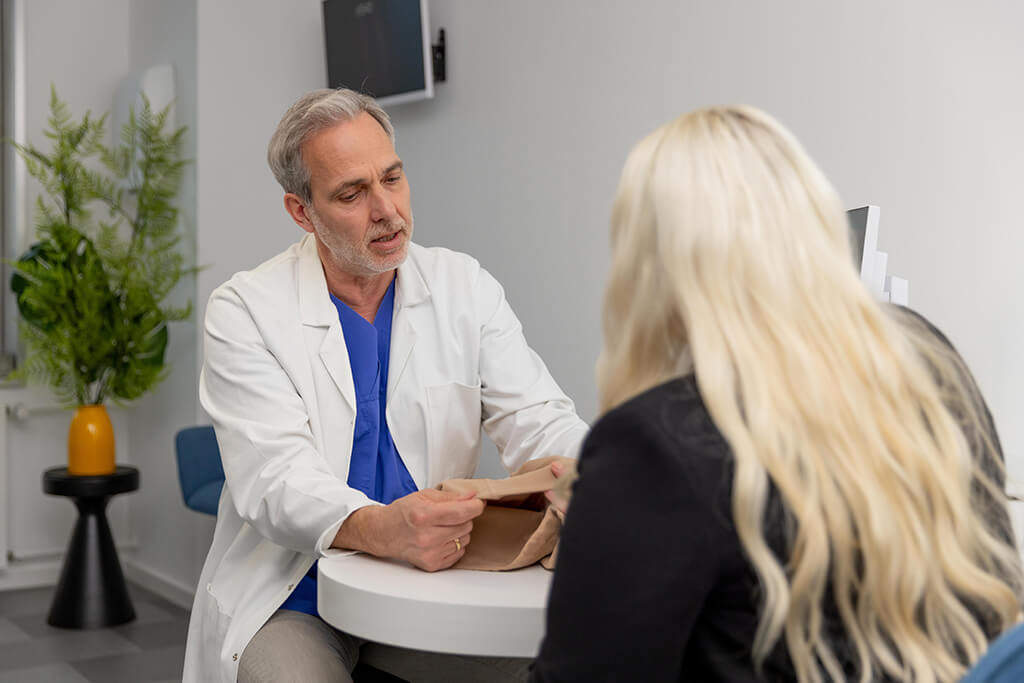
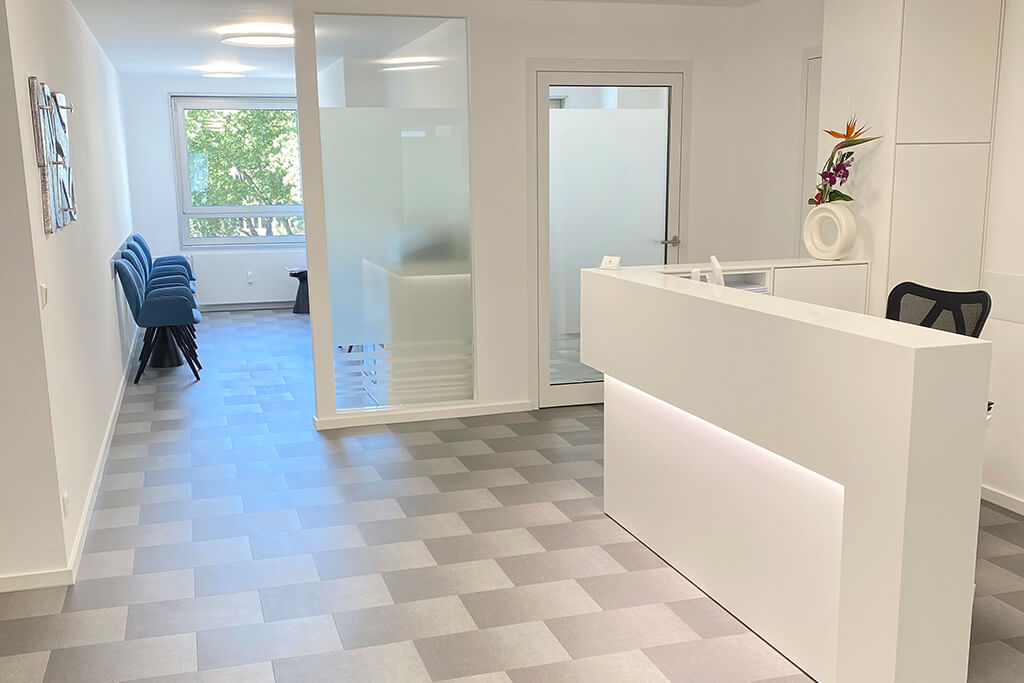
Impressions of the practice




Contact us
Do you have any questions?
Contact us by phone Monday to Friday from 09:00 to 19:00 or send us a message using our contact form.
Dr Ulrich Kusenack
Private practice for liposuction
e-mail info@dr-kusenack.de
Telephone +49 211 9 50 7 48 0
Fax +49 211 9 50 7 48 44
Königsallee 30
3rd floor
3rd floor
40212 Düsseldorf
Make an appointment by telephone
Monday to Friday:
Monday to Friday:
09:00 to 19:00
Office hours
Monday, Tuesday and Thursday:
09:00 to 19:00
Wednesday and Friday:
09:00 to 14:00
and by arrangement
