






Every day, women who are very worried about suffering from lipoedema come to me for a consultation. Having done their own research on the internet, they are frightened and unsure and often firmly convinced that they are suffering from lipoedema due to the symptoms described.
Lipoedema is rather rare
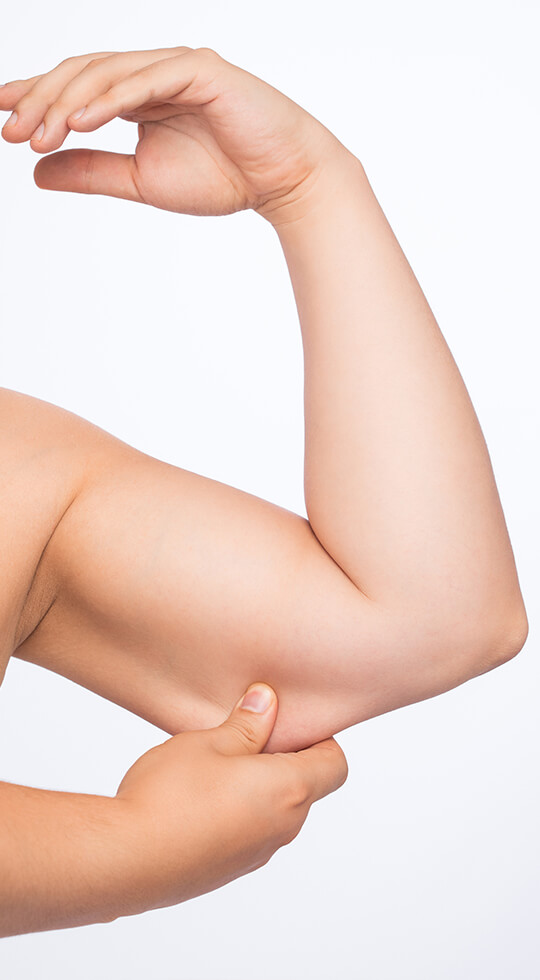
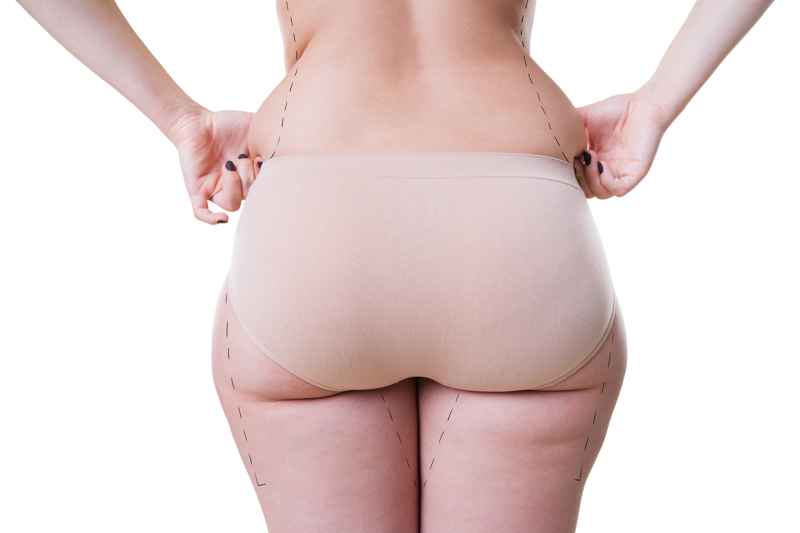
The good news first: true lipoedema is rather rare! Rather, most exercise- and diet-resistant fat pads on the legs, hips and arms are so-called lipohypertrophy - completely healthy and normal but nevertheless increased fatty tissue.
The mere fact that these fat deposits are not really amenable to a diet or change in diet or cannot be decisively influenced by exercise does not make these fat deposits lipoedema. I also hear more and more frequently from my patients that the slight undulation of their skin is a clear sign of lipoedema. This is by no means true either.

The diagnosis of lipoedema is not always easy, but visible changes in the skin such as the formation of nodules in the subcutaneous fatty tissue or the aforementioned rippling (cellulite) do not justify lipoedema.
What actually is lipoedema?
Lipoedema is defined as an always equal-sided (symmetrical) fat distribution disorder under the skin on the legs, hips or upper arms, which is associated with pain or a feeling of pressure. The second part of the sentence is important here: lipoedema is always accompanied by symptoms. If there are no symptoms, it is not a case of lipoedema. Nor can these symptoms be explained by another cause such as venous insufficiency or a disc problem.
Staging can be subjective
Even in my daily practice, staging only plays a subordinate role, as the transitions - especially between stages I and II - are often fluid and staging is subject to subjective impressions and therefore not always possible to categorise exactly. It is often the patients themselves for whom the categorisation is important. It seems to me that there is a great fear of stage II in particular, as this is perceived - albeit completely unfounded - as a threat to one's own health. In my lipoedema consultations, I most frequently encounter stage II followed by stage I. I encounter stage III the least.
Is development to a higher stage possible?
Many patients remain permanently in a certain stage, a development into a higher stage is not inevitable, but can occur - especially from stage I to stage II. For a development from stage II to stage III, a significant weight gain is usually necessary, which usually has other causes than lipoedema (poor diet, reduced metabolism, lack of physical activity).
Only in stage III can an attempt be made to have the costs of an operation (liposuction) reimbursed by the statutory health insurance fund - provided certain other conditions are met. Surgical treatment in stage I or II is not covered by statutory health insurance, but private health insurance can also attempt to cover the costs in these stages.
How can lipoedema be diagnosed?
In ultrasound or MRI (magnetic resonance imaging), there are no differences between the fatty tissue in lipoedema and normal fatty tissue - despite frequent claims to the contrary. In addition, the formation of nodules in the subcutaneous fatty tissue is not a sign of lipoedema - even if this can be read repeatedly on the Internet. Even the figure (external appearance) or excess weight are not mandatory criteria. The only thing that counts is the symptoms such as pain or a feeling of pressure. This is why there are also slim patients with lipoedema and overweight women without lipoedema.
How can I find out if I have lipoedema?
Whether you have lipoedema can therefore only be determined on the basis of your medical history/complaints and a physical examination. A blood test, an ultrasound or an MRI are not helpful. However, an ultrasound examination is used to rule out other causes of symptoms such as varicose veins (even if these are not visible from the outside) and is therefore an essential part of the diagnosis.
Phlebologists (vein specialists) clarify lipoedema
For this reason, the diagnosis of lipoedema in Germany is the responsibility of phlebologists (vein specialists). Phlebologists can use ultrasound to rule out venous insufficiency and provide patients with comprehensive advice on how to proceed with lipoedema and the various treatment options (conservative or surgical). Lipoedema is always part of the phlebological congresses and research in this area is still in its infancy.
When should you see a doctor?
If you notice or suspect the signs of lipoedema described above, I recommend that you consult a phlebologist for further clarification.
You are welcome to visit my practice, as we specialise in the detection and treatment of lipoedema.
